
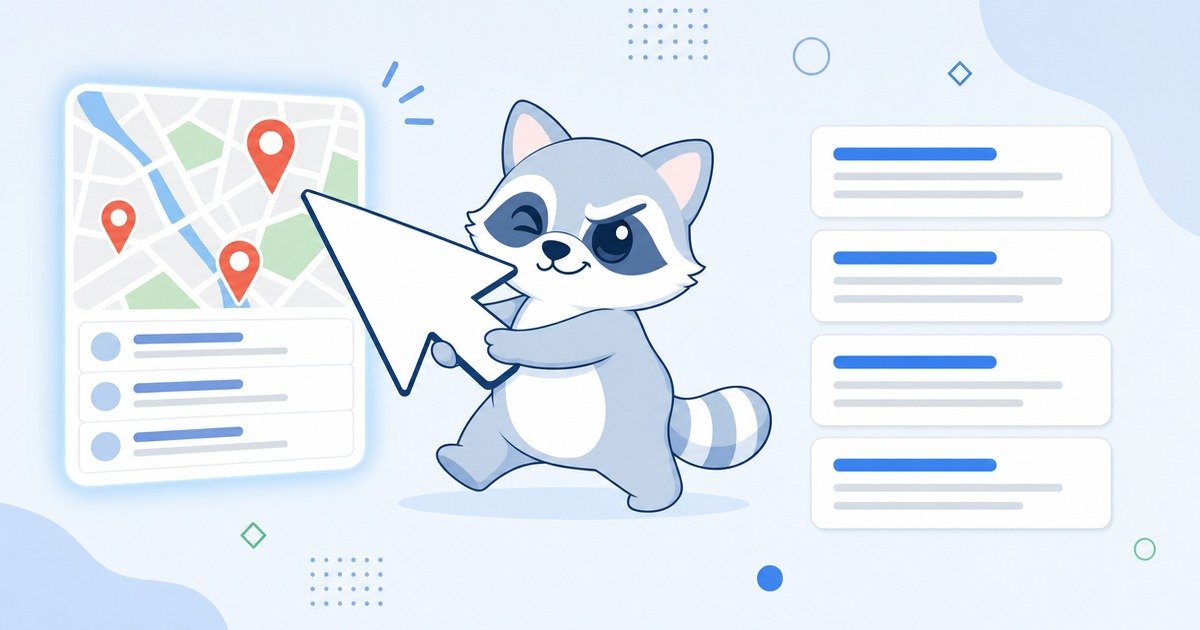
Search "dentist near me" on your phone in Singapore. Count what you see before the first blue link.
Usually an ad comes first. Then a map with three businesses, and only then the top organic result.
A clinic in Novena can rank number one organically and still lose the walk-ins to the three names on the map card above it. The map and the blue links are two separate games with separate rules.
Here is which one gets clicked, and which one to fix first.
Key Takeaways
- The local pack is the map card with three businesses. On most "near me" searches it sits above every organic result.
- Google says local ranking runs on relevance, distance and prominence. Two of those have almost nothing to do with your website.
- Organic ranking runs on content, links, on-page work and technical health. Winning one does not win the other.
- The local pack often converts with no site visit: a call, a direction request, a booking. The click never reaches your server.
- Organic wins research and comparison queries, and anything with no geographic intent.
- Fix the Business Profile first because it moves faster, then build organic because it lasts longer.
What The Local Pack Actually Is
The local pack is the boxed set of three businesses with a map, star ratings and a "More places" link. Google pulls it from Google Business Profile, not from your website.
That distinction matters more than anything else in this article. The local pack is a listings product, organic is a web index, and they happen to share a page.
The pack shows your business directly, like a shopfront. Organic shows a link to your website, which the searcher still has to click.
If local pack, SERP and citation are still fuzzy terms, our SEO glossary has the plain-English versions.
How You Win The Local Pack
Google has published what local ranking runs on. Its guidance on improving local ranking says local results are based mainly on relevance, distance and prominence.
Relevance is how well your profile matches the search. That means the correct primary category, complete business info and accurate services.
Distance is how far your business is from the searcher. You cannot optimise this.
Prominence is how well known the business is. Google says this includes how many websites link to your business and how many reviews you have, and that more reviews and positive ratings can help local ranking.
Notice what is missing from that list. Your blog, your H1 and your page speed appear nowhere in it.
Google is also explicit that there is no way to request or pay for a better local ranking. Treat anyone selling a guaranteed map position with suspicion 🙈
The real work is unglamorous: a claimed profile, the right categories, real photos and genuine reviews.
Our Google Business Profile setup walkthrough covers setup, and the deeper guide to ranking in Singapore's map results covers what moves the needle after that. If reviews are the bottleneck, our Google review link generator gives customers a one-tap link.
How You Win Classic Organic
Organic is a completely different job. It is about the page: what it covers, how it is structured, what links to it, and whether Google can crawl it.
Your profile category does nothing here. You win by publishing pages that answer the query better than the pages ranking now, then earning links for them.
That work is slow and compounding, and it is largely under your control.
You also control how you appear. In organic you write your own title and description, and you can test how they truncate in our SERP simulator.
In the local pack, Google decides what your listing says. So organic gives you control and takes time, while the pack moves faster but on Google's terms.
Why Number One Organic Still Loses The Customer
Say an aircon contractor ranks first organically for "aircon servicing bishan" and the phone is not ringing any more than before.
The reason is screen space. On a phone, the local pack can fill most of the first screen, so the thumb never reaches the organic result.
Three businesses with star ratings and a call button have already answered the question. Someone searching at 11pm in a hot bedroom wants a phone number, not reading material.
I do not have a verified local pack click-through figure to hand you, and I am not going to invent one. What I can say is structural: the pack sits higher, takes more space, and carries the buttons that match "near me" intent.
Those calls may never appear in your analytics. Google's Business Profile performance reporting counts calls, direction requests, messages and bookings separately from website clicks.
If you only watch Analytics, a large slice of local demand is invisible. The win rarely shows up as traffic, it shows up as a busier reception desk.
When Organic Wins Instead
Google only shows the local pack when the search looks local. Three query types stay organic.
Research queries. "How often should aircon be serviced", "is root canal painful". No map appears, because a map cannot answer the question.
Comparison queries. "Best aircon servicing Singapore", "clear aligners vs braces". A listing card cannot carry a comparison.
Non-geo and B2B queries. If you sell nationally or serve business clients, there is often no local pack on your keywords at all. When the buyer does not care where your office is, proximity stops being a lever.
These searches are where the shortlist gets built. The buyer then searches again with local intent and picks from the map, so organic feeds the pack.
For a dental clinic the split is clean: explainers and cost pages win organic, and "dentist near me" is won on the profile. We broke that down for dental clinics competing in Singapore search.
The Bit That Undercuts Both
Both the pack and organic are losing ground to the results page itself.
SparkToro's 2026 analysis of Similarweb clickstream data found that 68.01% of Google searches in the first four months of 2026 ended without a click anywhere. AI answers, panels and in-result interfaces keep people on Google.
This cuts both ways for a local business. A no-click search that ends in a phone call from the map pack is still a customer.
A no-click search where an AI summary answers the question you wrote a 2,000 word guide about is a loss. We covered that shift in what zero-click search does to your traffic.
The goal now is to get chosen inside the results, not just linked from them. That work sits alongside traditional SEO services, and it is why we also run a GEO agency in Singapore.
Which To Chase First, By Business Type
Single-location service business with an address (clinic, salon, aircon contractor): local pack first, no debate. Profile, categories, photos and reviews show movement in weeks, not quarters.
Multi-location business: local pack per location, organic for the landing pages. Both, immediately.
Service-area business with no walk-ins (plumbers, movers, travelling tutors): still the local pack, but distance fights you across the island. Organic and paid reach the estates you cannot rank in.
B2B, national or online-only: organic first. If there is no map pack on your keywords, profile work is a rounding error.
Anyone who needs leads this month: neither. Paid is the only lever that fast, which is where Google Ads vs Meta Ads becomes the real decision.
So The Answer Is Both, In This Order
Fix the Business Profile first. It is cheaper, faster, and it sits above everything else on the searches with money behind them.
Google Business Profile optimisation is weeks of work, not a year. Then build organic for the queries that create demand before anyone opens a map.
Competitors cannot copy organic work in a weekend. It also keeps working when a new clinic opens closer to your customer than you are.
Chasing organic while your profile has the wrong category is doing the hard thing first.
For an honest read on which side is costing you more, our local SEO team will tell you straight, and any decent SEO consultant in Singapore should too. We are a Singapore SEO firm that would rather fix your map listing in a month than sell you a year of blog posts.
Get in touch and we will look at both sides of the page with you.