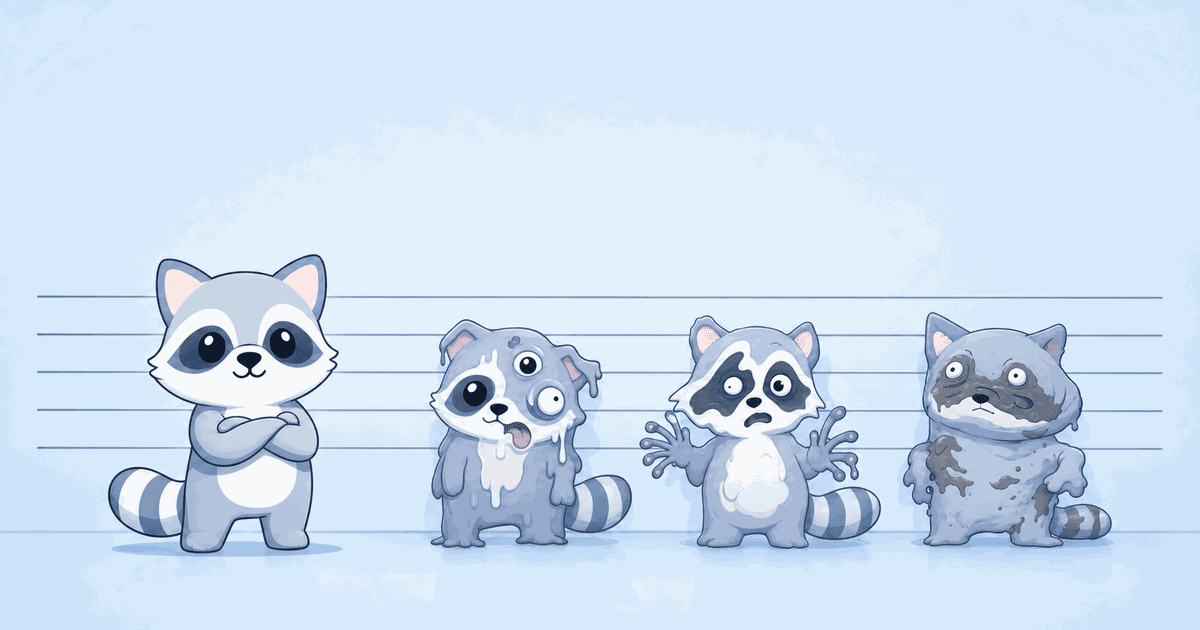
Our mascot is a raccoon. For our whole first month, it looked like it owed someone money.
A stray third arm, a raccoon that was not even our mascot, the word "Logo" typed where our logo belongs. I caught them all before they shipped, but some came far too close.
That is AI slop, and Singapore businesses post it daily, fully convinced it looks fine.
Here is the roast of my own back catalogue, receipts included, then the exact playbook that fixed it 👀
Key Takeaways
- AI slop has four tells: wrong hands, garbled text, melted edges, broken symmetry. Check those four and you catch nearly everything in two seconds.
- Our own first-month outputs failed every check. I got them right in the end, but only after regenerating each a few times and burning credits. Screenshots below.
- A better model fixes the melting, not the boring. Our biggest visual jump came from sharper briefs, not the tool switch.
- Let a language model write your image prompt. Two lazy lines get you stock soup. A proper brief gets you an idea.
- High quality renders cost only a few US cents each. Binning a bad one and rerunning it is the cheapest quality control in marketing.
- Keep words out of the picture. Generate the scene clean, then add your headline as an overlay in a design tool.
The Four Tells
No design degree needed. Four checks, two seconds each.
Hands. Count the fingers, then the knuckles. Models got good at everything faster than they got good at hands, so hands crack first.
Text. Read every word inside the image. Slop text is almost-language: "Raed More", "SPECAIL OFFRE", a logo melted to porridge.
Edges. Look where two things meet. Fur into a wall, a sign into the sky, slop cannot hold a boundary.
Symmetry. Eyes at two heights, ears from two different animals, one shoe fatter than the other.
Learn these four and you cannot unsee them. Now watch me fail all four with my own work 🤣
My Own Hall of Shame
Real raccoons my own pipeline produced in month one, March 2026. All of them from Google's early image model, Nano Banana 2.
Not one of them shipped, but only because I caught them.
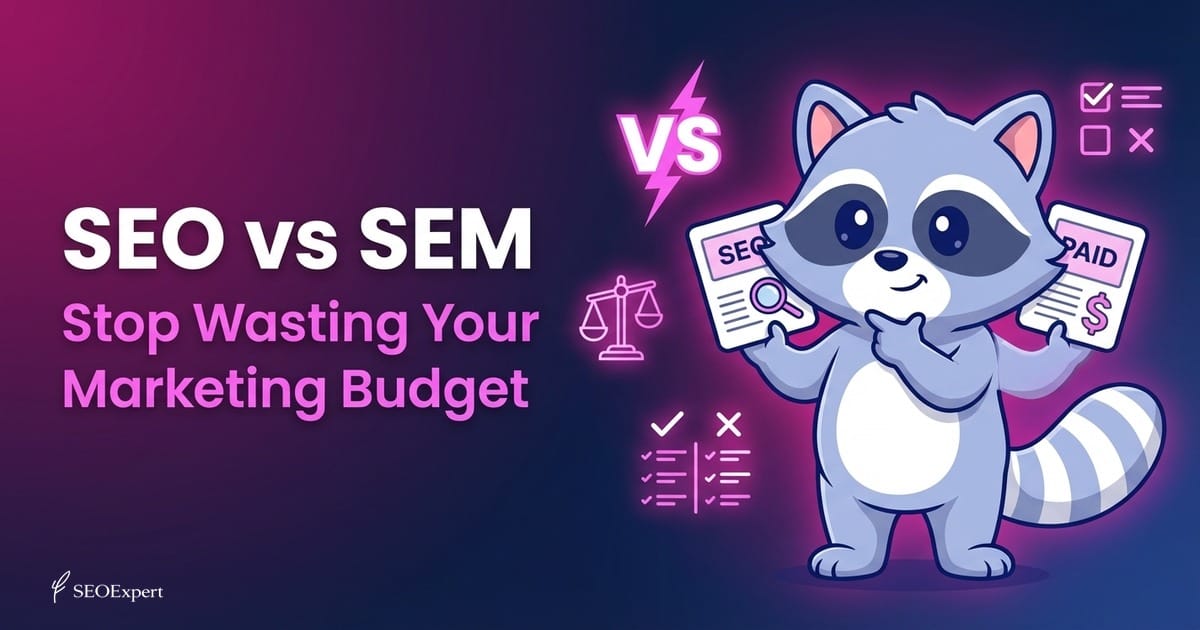
Exhibit one fails the hands check before anything else. Count the arms: one on the chin, one on the SEO sheet, one on the PAID sheet, which makes three.
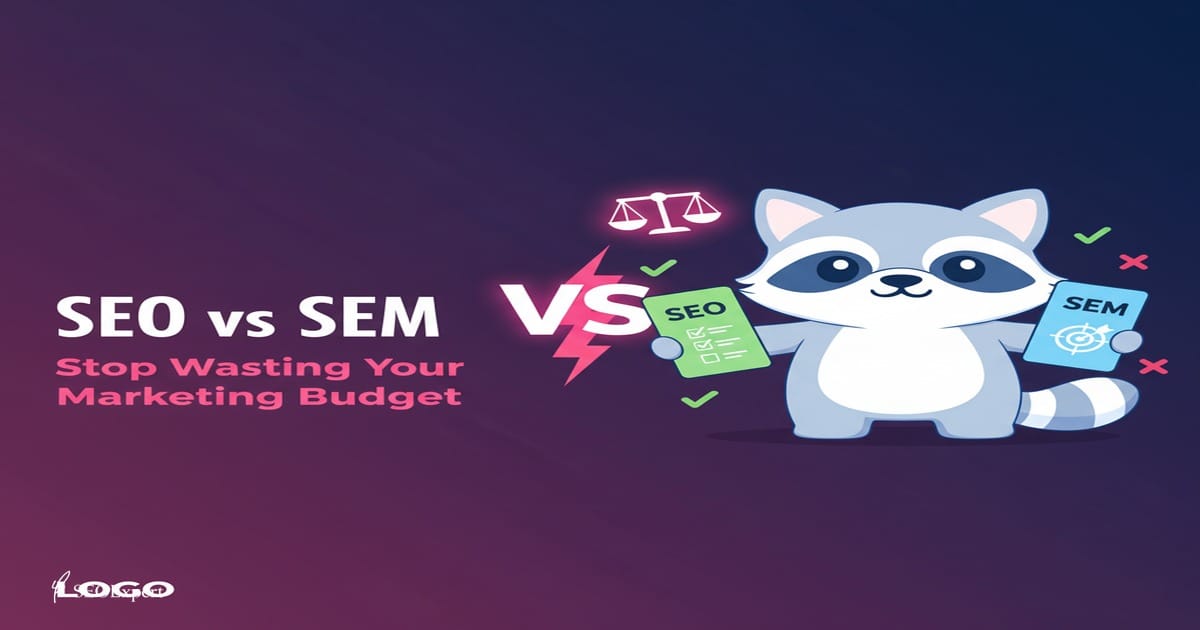
Exhibit two fails the text check. Where our logo belongs, the model simply typed the word "Logo", a placeholder rendered with full confidence 🤡 The raccoon is squashed on top of that, compressed like the render ran out of room.
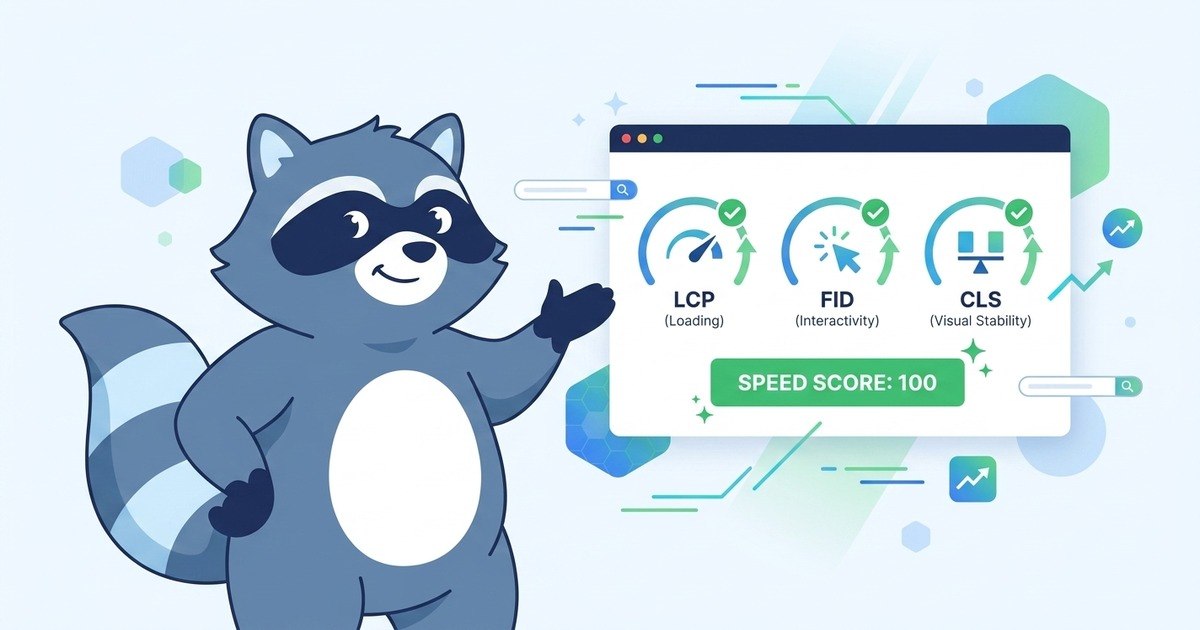
Exhibit three is not even our mascot. The model dropped the character sheet and drew a generic raccoon, totally off from the animal we actually use.

Exhibit four is the closest the model got to our mascot, which is what makes it sneaky. Up close it drifts: coloured mittens, an off shade of blue, stray hair strands, and a pointy tail instead of soft rounded rings.
The uncomfortable part is what they cost. None of these ever shipped, but each took two or three regenerations before it was usable, and every retry quietly burned credits and tokens 🥹
It Is Not Just Us, It Is All Over Singapore
Once you know the tells, you clock them everywhere: the void deck notice board, the mall directory, the National Day banner down the road.
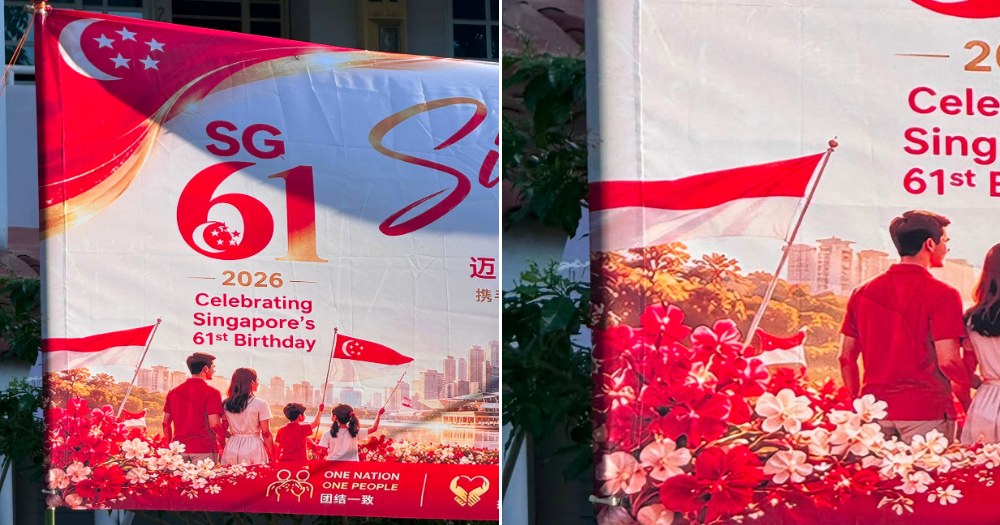
Banner photos: courtesy of Zu, via Mothership.
This one went up around Block 409 Bedok North in July 2026. Look at the flag: red and white, but the crescent and the stars have quietly vanished.
Mothership reported that other banners in the same batch even hallucinated a fake landmark labelled "Singapore National Indoor Stadium". Residents made them in good faith, nobody ran the four checks, and it got printed, hung and photographed before anyone counted the stars.
The lesson is not that AI is bad. The lesson is that one honest glance before printing would have caught all of it.
One Raccoon, Three Generations
Here is our mascot across three generations of our own pipeline. Watch what actually changed, because it is not just the model getting better.
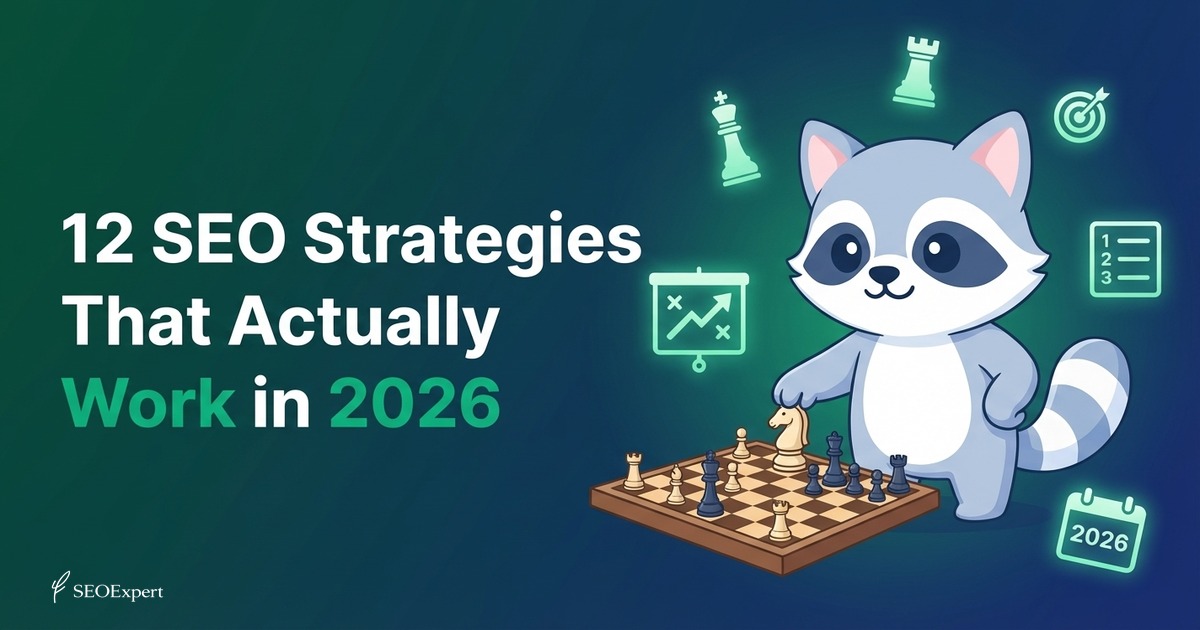
Generation one, March 2026, made with Nano Banana 2. This is the same model behind every cursed exhibit above, and it rarely behaved first try.
Two or three regenerations was normal before the hands, text and tail all cooperated, and every round ate more credits and tokens. When it finally landed, this is what we got:
A raccoon, a chessboard, some floating icons. Nothing melts, and nothing happens either: competent and instantly forgettable.
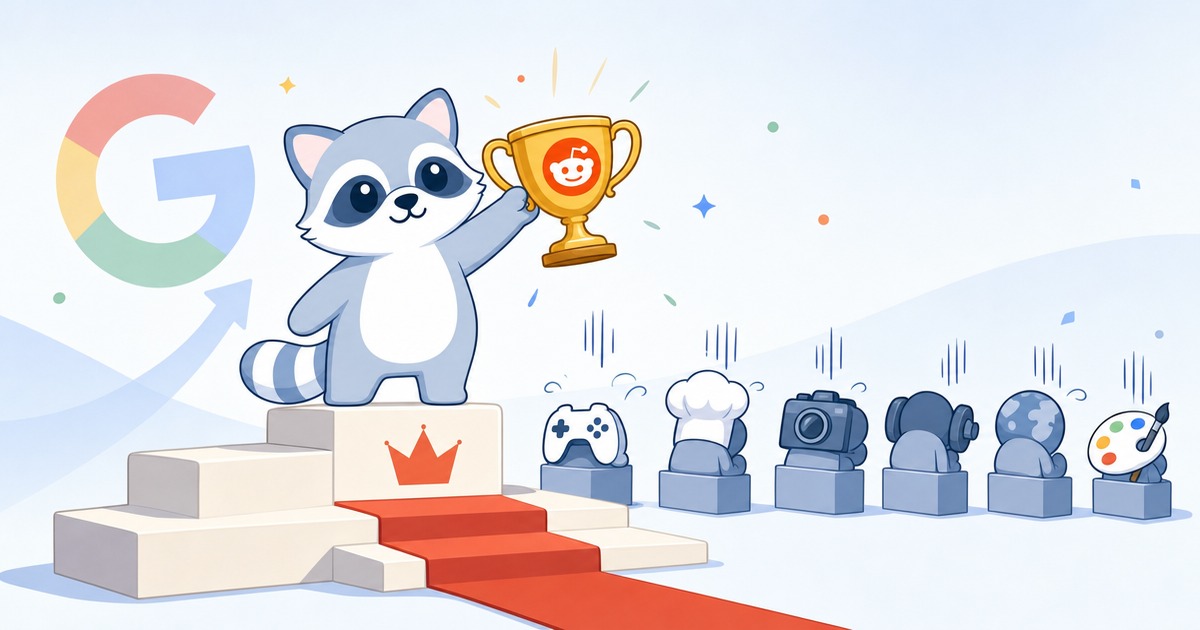
Generation two, June 2026. We changed two things at once: we moved to OpenAI's gpt-image-2, the model we still use, and we let Claude Opus 4.8 write the image brief.
The cursed era ended overnight.
Steadier anatomy, cleaner fur, no bonus eyes.
But the ideas stayed polite. Opus handed us a tidy winner's podium: correct, on-brand, and forgettable.
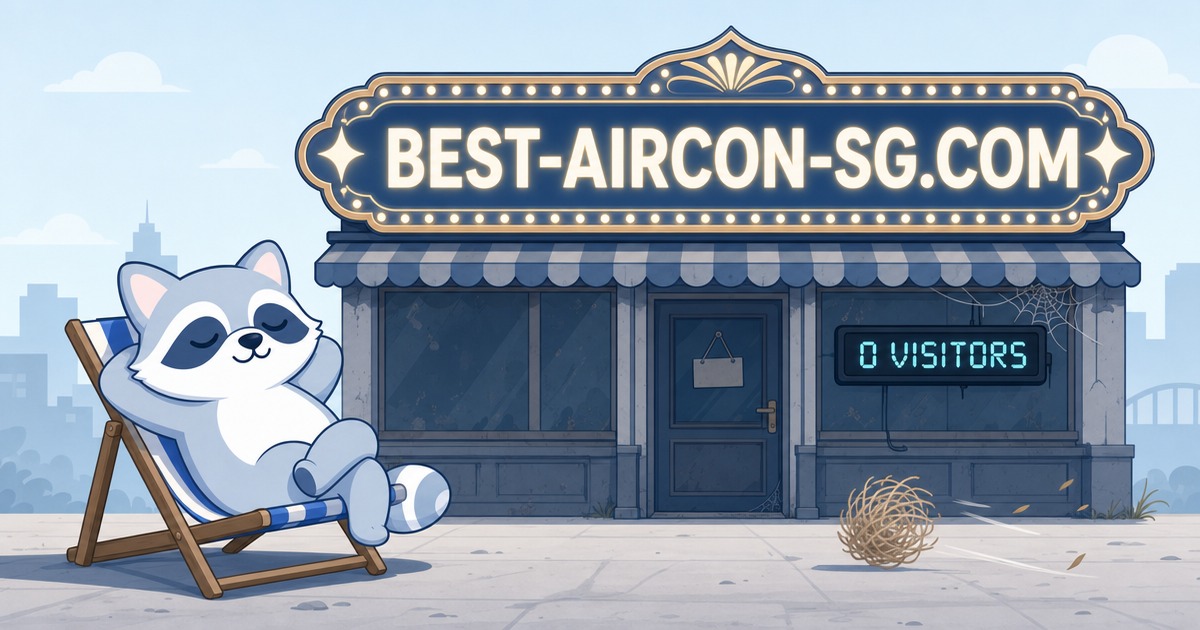
Generation three, July 2026. Same model as generation two, gpt-image-2, with one variable changed: Fable wrote the brief this time, not Opus.
The scene it asked for was a raccoon lounging in a deck chair outside a dead shop called BEST-AIRCON-SG.COM, with a "0 VISITORS" counter glowing in the window.
One glance and the whole argument lands.
Same Model, Different Author, Different Result
gpt-image-2 rendered both the timid podium and the dead shopfront. The model never changed. The only variable was who wrote the brief.
So we ran it properly. Two live articles, same model, same brand rules, and we had Opus 4.8 and Fable each brief an image for the same piece. Here is what came back:
First up, Google Search Console vs Bing Webmaster Tools.
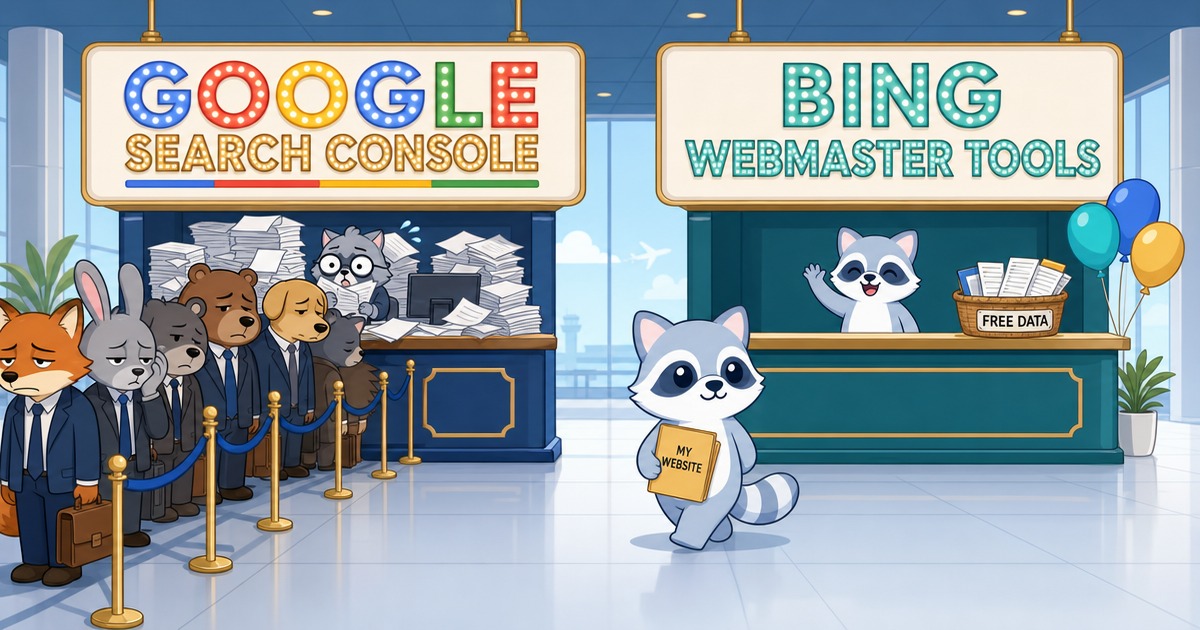
Fable. A queue backs up at the Google desk. The Bing counter sits empty with balloons and a basket marked FREE DATA.
The whole argument, before you read a word.
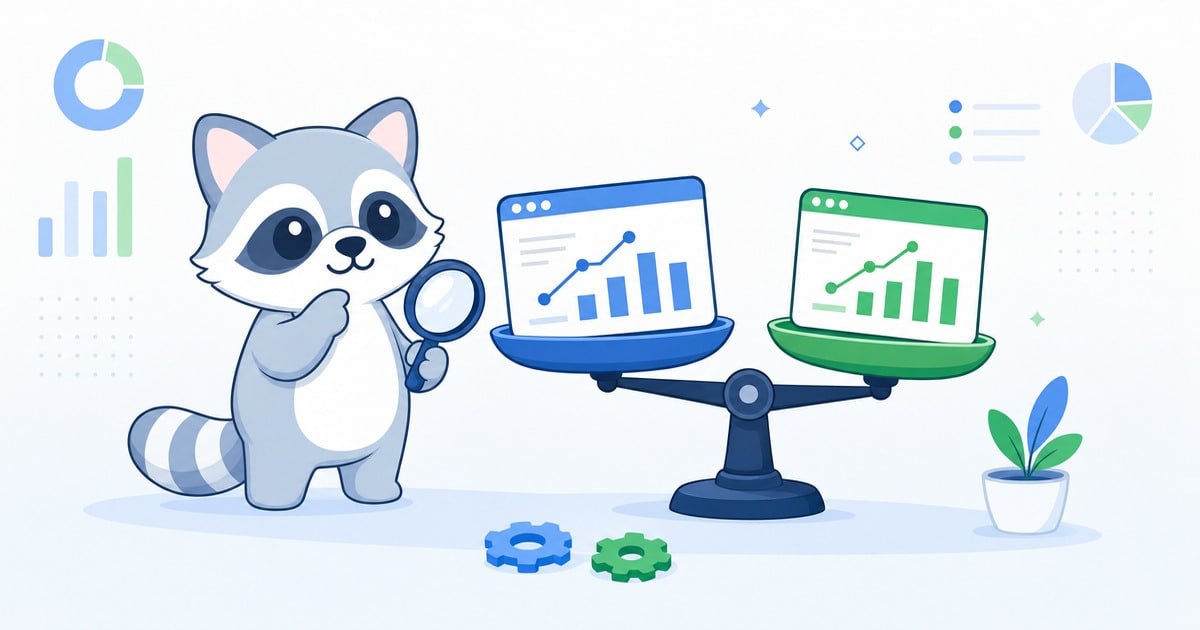
Opus 4.8. A raccoon weighs two dashboards on a scale. No labels, no conflict, nothing at stake.
Then Ahrefs vs Semrush vs Moz:
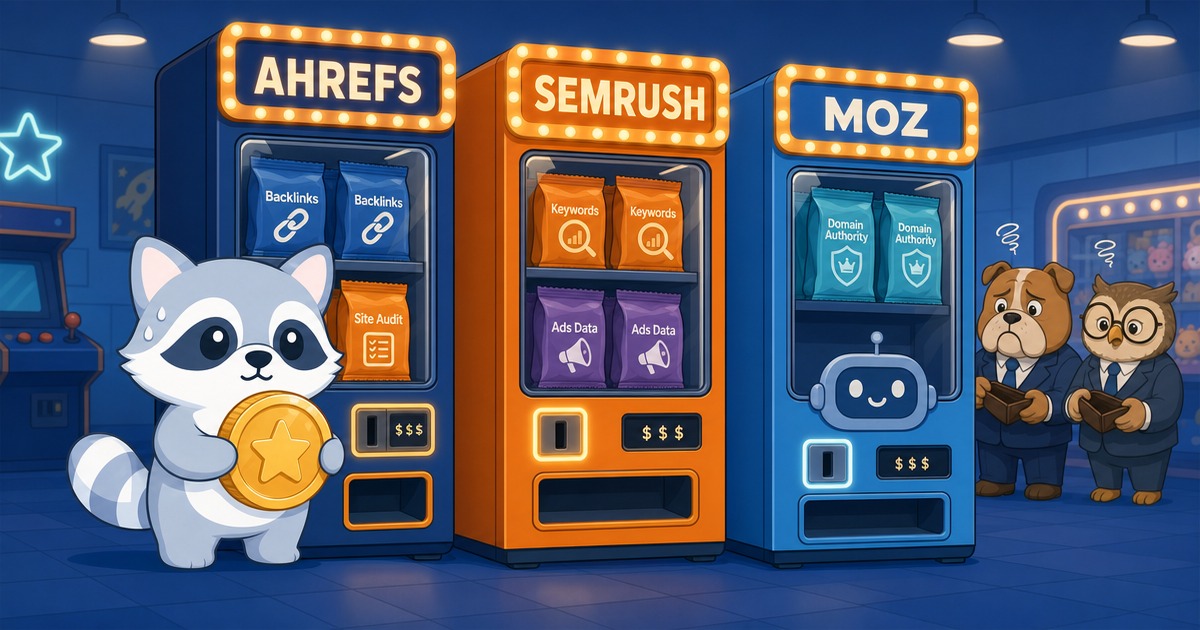
Fable. Three vending machines charging for backlinks, keywords and domain authority. Our raccoon has one coin.
That is the pricing argument in a single frame.
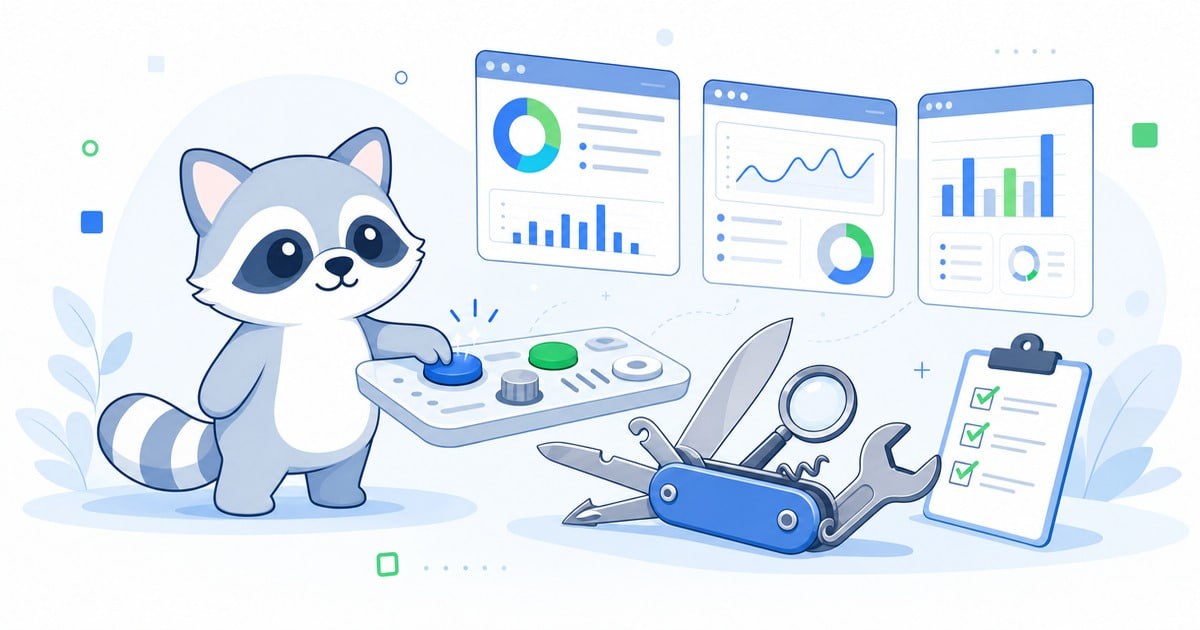
Opus 4.8. A tidy control panel and a smiling raccoon. Fine. Also interchangeable with every other SEO article online.
Both times Fable took the featured image slot for our articles. Stronger visual, more unique, and it does not look like the AI slop already flooding every other blog.
The tool is rarely your ceiling. The brief is, which is why we are just as loud about content that does not sound like a robot wrote it.
The Playbook, Step by Step
Five steps. This is the whole process behind every image on this blog now.
Step 1: a language model writes the prompt, not you. The step everyone skips, and the one that matters most. We run our prompting through OpenClaw, so we can switch between models like Opus 4.8 and Fable in seconds and hand the brief to whichever suits the job. It writes the scene like a creative director: subject, setting, action, mood, style.
Step 2: feed a reference, every single time.
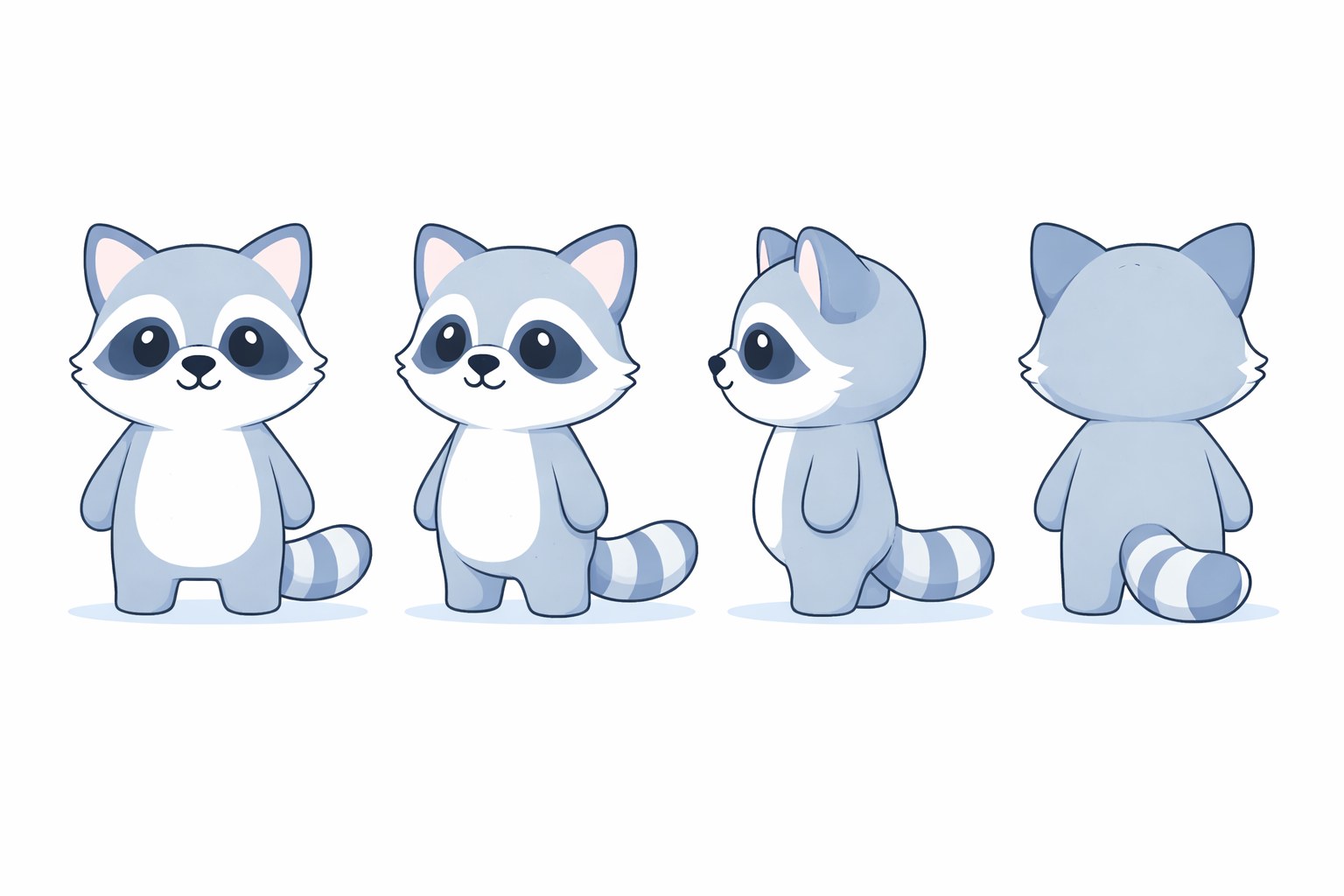
The hard part of a mascot is not one good picture. It is picture fifty still looking like the same animal.
So a clean turnaround sheet goes in with every request, and the model copies a real character instead of inventing one per render. Same fur, mask and tail, in the same words, every time.
No mascot? Same rule. Product shots, founder photos and brand scenes all want a reference so the model copies instead of guessing.
Step 3: run the four tells on every output. Hands, text, edges, symmetry. Fail one, bin the file, rerun. No mercy for a render that cost cents.
Step 4: know the real cost, then stop treating renders as precious. A high quality gpt-image-2 render costs only a few US cents, and you can check the live figure on OpenAI's price calculator. Even a fussy featured image that takes four tries lands well under a dollar.
The render is cheap. The real cost is having the discipline to throw out an image that is almost good enough and generate it again.
Step 5: words go on top, never inside. Any text inside the generation is at the model's mercy, and you saw upstairs what that looks like. So we generate the scene clean, then have Opus 4.8 overlay the headline for us, crisp and correctly spelled every time. A design tool like Canva does the same job by hand in a minute, and the type stays editable next month when the offer changes.
Step 5 is also why our raccoon looks the same everywhere it shows up.
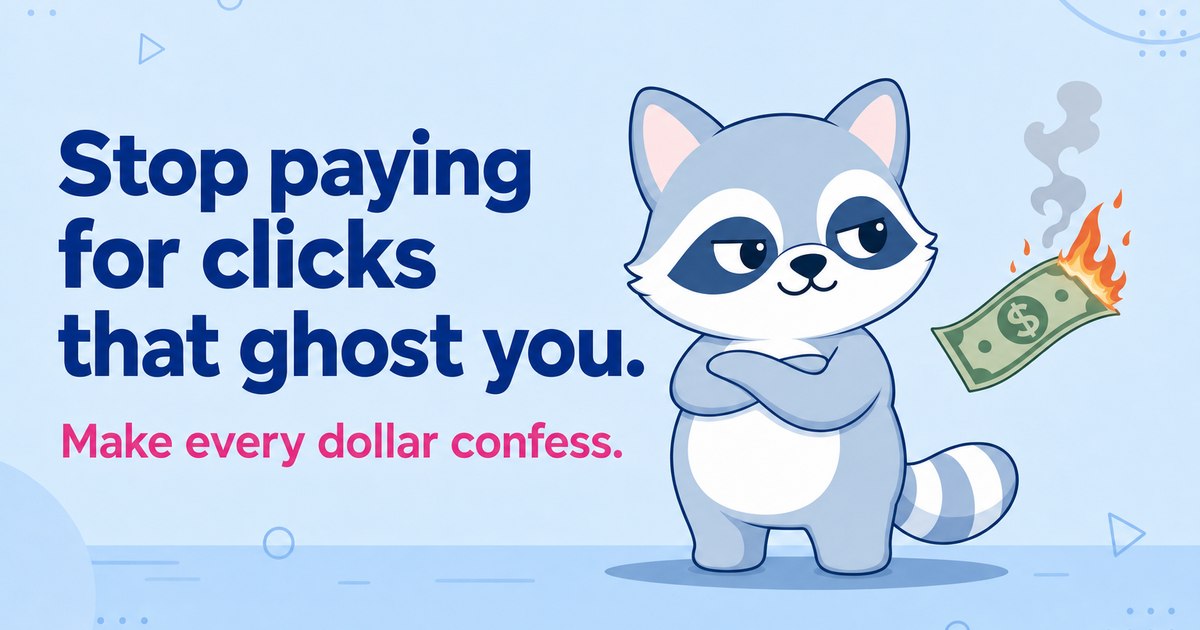
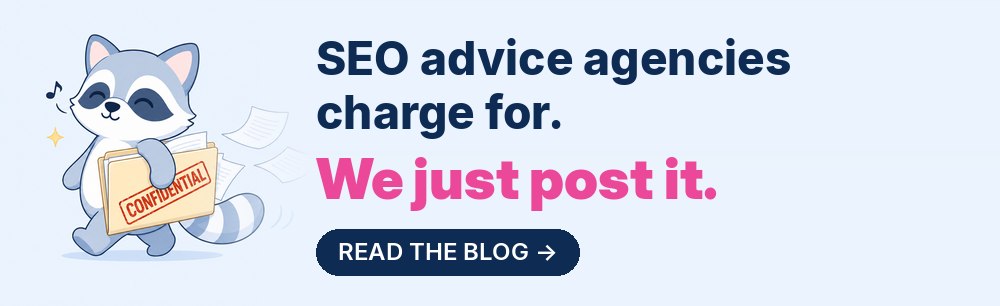
The top one is our Google Business Profile and WhatsApp product image. The bottom one lives in our email signature.
Different jobs, recognisably one animal.
Your Images Are an SEO Problem Now
Clean images are not just branding now, they are SEO. Google reads your file names and alt text, and increasingly the picture itself, so a visual with six fingers works against you. Our image SEO guide walks through the mechanics, and the SEO glossary has plain-English versions of any term here that trips you up.
AI search raises the stakes. Tools like Google's AI Overviews and Perplexity increasingly surface images alongside their answers, so a clean, correctly labelled visual is one more thing a machine can pull and show. Earning that spot is the whole game a GEO agency in Singapore plays.
And it still comes down to trust. A visitor who clocks a melty logo does not think "AI slop", they just quietly feel a little less like paying you.
The Bottom Line
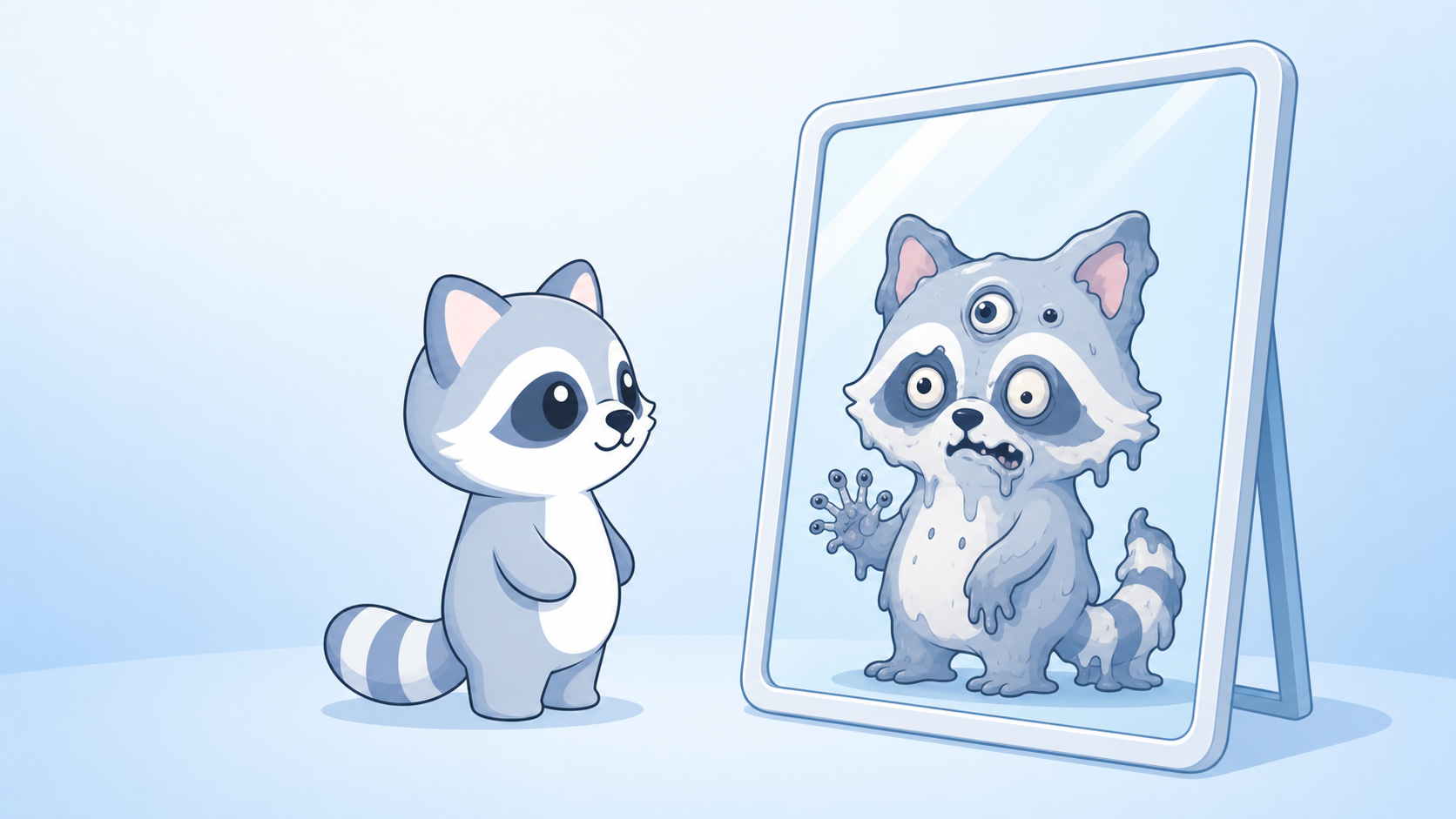
My raccoon went from three-armed creature to something I happily put in front of customers. Same tools everyone has, one model switch, and a human who looks before anything ships.
We are a Singapore SEO expert that tests this on our own brand before preaching it, the same way we ran our own seven-month domain test. That same obsession with the small stuff is what goes into our SEO services.
So run the four checks on your images tonight: hands, text, edges, symmetry. And when you are ready to take the whole search channel as seriously as we take our raccoon, our SEO consultant page is a good place to start, or just come talk to us and bring your worst raccoon 😏