
SEO (Search Engine Optimisation) is the practice of improving your website to rank higher in organic (unpaid) search results. SEM (Search Engine Marketing) is the broader practice of gaining search visibility through paid advertising, most commonly Google Ads. The core difference: SEO earns traffic over time through content and optimisation; SEM buys traffic immediately through bidding on keywords. Both target the same search engines and the same searchers. How they get there, what they cost, and what you get in return are entirely different.
Singapore businesses that blur these two together tend to underfund one, overspend on the other, and wonder why their search marketing isn't delivering the returns they expected.
Key Takeaways
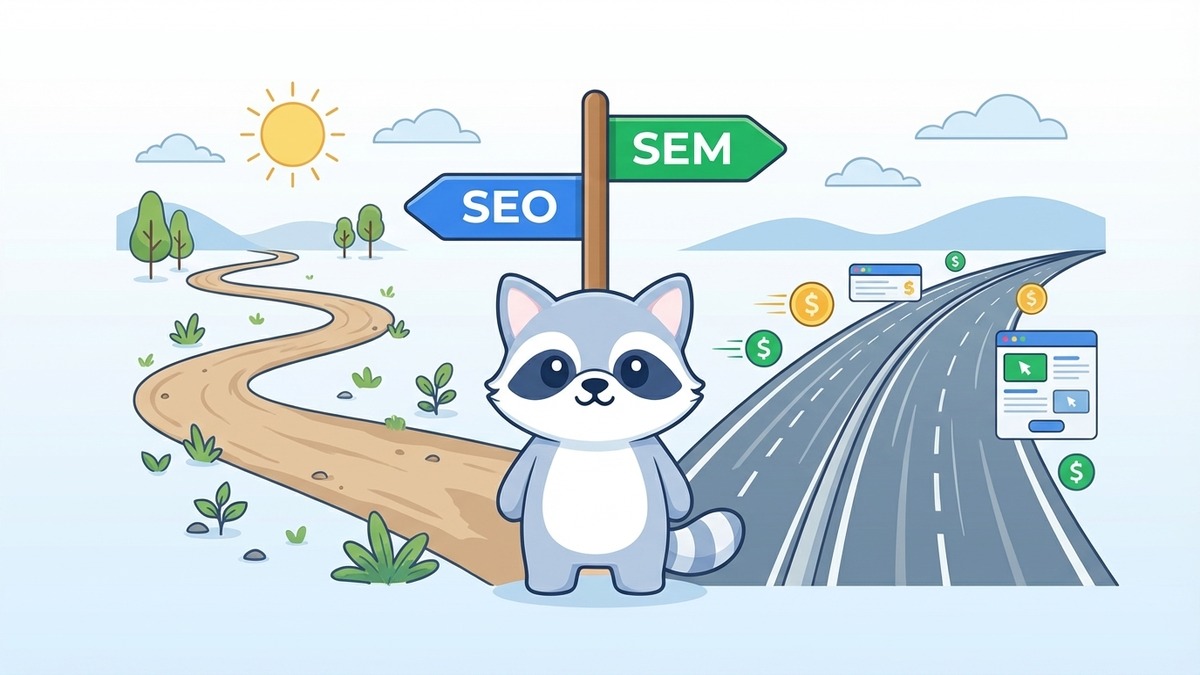
- SEO builds organic rankings over months; SEM delivers paid traffic immediately
- SEM stops the moment you stop paying; SEO continues generating traffic after the work is done
- Singapore Google Ads CPCs are among the highest in Southeast Asia, making the long-term ROI case for SEO particularly strong
- SEO and SEM are not competitors: the most effective Singapore businesses use both
- SEM is best for new launches, short campaigns, and testing offers quickly
- SEO is best for long-term traffic, brand authority, and sustainable lead generation
- Both require keyword research, but use that research differently
The Definitions, Precisely
SEO: Earning Your Place on Page One
Search Engine Optimisation is the process of optimising your website so Google ranks it highly in unpaid ("organic") search results.
When a Singapore business owner Googles "accounting firm Orchard Road" and clicks a result that isn't an ad, that's an organic result. The business earned that position through on-page optimisation, content quality, backlink authority, technical health, and other ranking factors.
You don't pay Google per click for organic traffic. What you invest is time, expertise, and ongoing optimisation work. The payoff is compounding: a well-optimised page can generate traffic for years.
SEM: Buying Your Place at the Top
Search Engine Marketing typically refers to paid search advertising, most commonly through Google Ads (formerly Google AdWords).
Those listings at the very top and bottom of the search results page marked "Sponsored" are SEM. The business bid on the keyword, won the auction, and paid Google each time someone clicked the ad.
SEM can also refer to the broader practice of all search engine visibility, including organic, but in most Singapore marketing conversations, "SEM" means paid search.
The advantage: you're on page one the moment your campaign goes live. The trade-off: you pay for every click, and the moment your budget runs out or you pause the campaign, the traffic stops.
If you want to understand the mechanics of how organic search works before diving into the comparison, our guide on how SEO actually works covers the full picture.
SEO vs SEM: The Comparison Table
| Factor | SEO | SEM |
|---|---|---|
| Cost per click | Free (organic) | Pay per click (varies by keyword) |
| Time to results | 3 to 6 months typically | Immediate (campaign launches today) |
| Longevity | Traffic continues after work is done | Traffic stops when budget stops |
| Trust signals | Organic results often perceived as more credible | "Sponsored" label signals paid placement |
| Targeting | Keyword and intent-based | Keyword + demographic + location + device |
| Data speed | Slower to test (algorithm takes time) | Fast testing of messages and offers |
| Competition | Based on content quality and authority | Based on bid amount and Quality Score |
| Best for | Long-term sustainable growth | Short-term campaigns, launches, testing |
| Skill required | Content, technical SEO, link building | Campaign management, bid strategy, copywriting |
Singapore's SEM Reality: The Cost of Buying Traffic
Singapore has some of the highest Google Ads cost-per-click rates in Southeast Asia. Competitive industries can be brutal:
- Legal services: S$10 to S$40+ per click
- Financial services: S$8 to S$30+ per click
- Medical/dental: S$5 to S$25+ per click
- Digital marketing / SEO agencies: S$4 to S$20+ per click
- General SME categories: S$1 to S$8 per click
These figures are approximate and fluctuate based on competition, Quality Score, and targeting. But the pattern is clear: buying traffic in Singapore is expensive.
This is precisely why the long-term ROI case for SEO in Singapore is so strong. If an organic ranking generates 1,000 clicks per month at zero cost per click, the equivalent SEM spend (at even a conservative S$3 per click) would be S$3,000 per month. Permanently. Every month. For as long as you want that traffic.
That doesn't mean SEM is wrong to use. It means you need to use it strategically, and you need to understand what you're paying for versus what you're building.
When to Use SEO
SEO is the right investment when:
You're building for the long term. If you want to be generating organic leads 12 months, 24 months, or 5 years from now without paying per click, SEO is the mechanism.
You're targeting informational searches. People researching products, comparing options, and learning about their problems respond well to high-quality organic content. SEO brings them in at the top of the funnel.
You want brand authority. Ranking organically for key terms in your industry signals expertise and trustworthiness in a way that a paid ad doesn't.
Your margins make SEM expensive relative to conversion. If a customer is worth S$200 and your SEM cost per conversion is S$180, the economics are brutal. SEO changes the equation by removing the per-click cost.
You're investing in a defensible asset. SEO rankings, once earned, compound over time. Strong organic positions are hard for competitors to displace quickly.
When to Use SEM
SEM is the right tool when:
You need traffic now. A new website with no SEO authority won't rank organically for competitive keywords for months. SEM bridges that gap immediately.
You're testing a new offer or landing page. SEM delivers fast, high-volume feedback. You can run split tests, measure conversion rates, and refine your offer in weeks rather than months.
You're running a time-limited campaign. Product launches, seasonal promotions, limited-time offers, and events have a fixed window. SEM can be turned on precisely when needed and turned off when the campaign ends.
You want guaranteed top placement. In highly competitive industries where organic page-one ranking takes years of work, SEM guarantees visibility while the SEO builds.
You're targeting high commercial intent. Someone who searches "hire accountant Singapore now" is close to buying. SEM captures that intent at the exact moment. PPC services are built around capturing these high-intent moments.
How SEO and SEM Work Together
The most effective Singapore businesses don't choose between SEO and SEM. They run both, intelligently.
Here's how they complement each other:
Use SEM to test before you invest in SEO. Before spending months building organic content around a keyword, use SEM to validate that keyword actually converts. High impressions but low conversions in SEM? That keyword might not be worth pursuing organically either.
Use SEO data to improve SEM campaigns. Your organic search data (from Google Search Console) reveals which queries your audience uses. Feed those insights into your SEM keyword targeting. AI tools like ChatGPT can also accelerate keyword research and content drafting for both channels; our breakdown of ChatGPT for SEO tasks covers where it genuinely helps and where it falls short.
Cover both paid and organic listings. Studies show that when a brand appears in both the paid ad spot AND the organic results for a query, total click-through rates and brand trust increase. Owning both signals dominance in that search.
Use SEM to fill gaps while SEO builds. For competitive terms where ranking organically will take 6 to 12 months, SEM keeps you visible in the interim.
Understanding where SEM fits within your full digital marketing mix is part of building a sustainable strategy. Our article on SEO in digital marketing covers how search, social, email, and paid work together.
Common Misconceptions About SEO and SEM
"SEO is free." The clicks are free. The expertise, tools, content creation, and ongoing optimisation work are not. Good SEO has real costs. They're just not paid to Google per click.
"SEM gets you ranked." SEM shows you in paid slots. It has zero impact on your organic rankings. Running Google Ads does not help (or hurt) your SEO.
"I'll do SEM until SEO kicks in, then stop ads." This ignores the value of SEM for high-intent keywords where paying for the click is worth it regardless of your organic position.
"SEO takes too long, I'll just do SEM." If you only run SEM, you're on a treadmill. The moment spending stops, traffic stops. There's no compounding value. You're renting traffic, not building an asset.
The Verdict for Singapore Businesses
For most Singapore businesses, the right answer is: start with SEM for immediate visibility, build SEO in parallel for long-term value, and gradually shift the budget balance toward organic as rankings mature.
The exact mix depends on your industry, budget, timeline, and goals. A startup that launched last month needs SEM today. An established brand in a competitive sector needs a long-term SEO investment to stop paying permanently inflating SEM costs.
If you're not sure which approach makes most sense for your situation, or you want to understand why your competitors are likely investing heavily in organic search right now, read our article on why your competitors are investing in SEO.
Ready to build a search strategy that doesn't depend entirely on ad spend? Talk to the SEOExpert team. We'll show you exactly what a combined SEO and SEM approach looks like for your business in Singapore.