

If you do site audits, you have two real desktop choices: Screaming Frog or Sitebulb. Both crawl your site, both surface the same general categories of issues, and both are made by people who clearly understand SEO at a serious level.
Screaming Frog is the Swiss Army knife. Sitebulb is the polished consultant.
Picking the right one depends on whether you want raw data and total control, or actionable reports and visual analysis.
Here is the honest comparison.
Key Takeaways
- Screaming Frog is the desktop crawler most agencies run for raw audit data. It is fast, flexible, and the free tier handles small sites.
- Sitebulb is the auditor's auditor. It crawls, then layers on prioritised recommendations, visual reports and clear explanations.
- Screaming Frog's licence is a flat annual fee rather than a monthly subscription. Sitebulb runs on a monthly subscription.
- For technical SEO on a desktop budget, Screaming Frog. For client-friendly audit reports, Sitebulb.
- Many agencies run both. They serve different parts of the workflow.
What Each Tool Does
Both Screaming Frog and Sitebulb crawl websites the way Googlebot does, then surface what they find. Both can crawl up to several million URLs depending on your hardware and licence tier.
Screaming Frog SEO Spider is a desktop application (Windows, macOS, Linux) that runs locally. It is free for small sites, and a paid annual licence unlocks unlimited crawling plus advanced features (JavaScript rendering, custom extraction, scheduling).
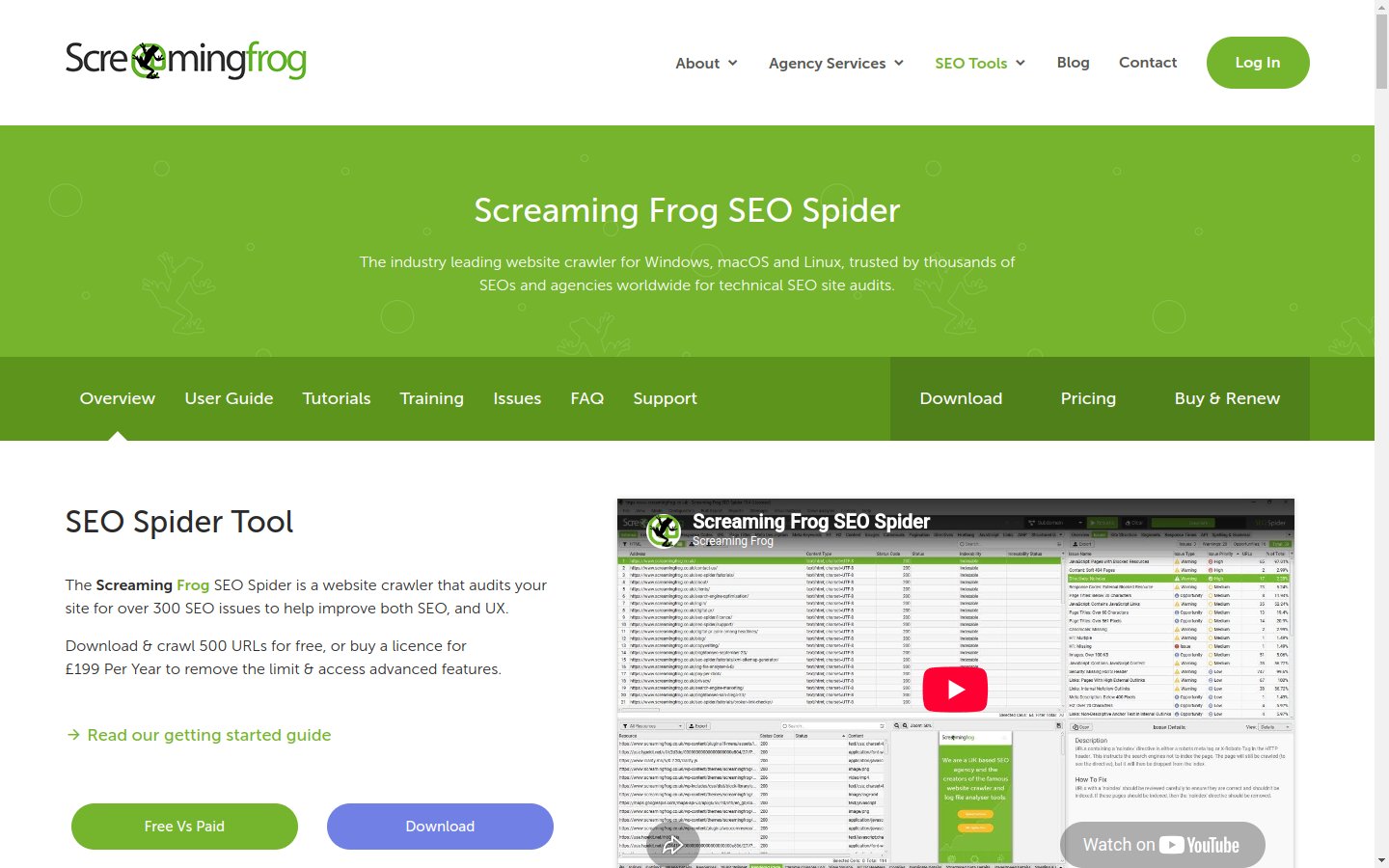 Source: Screaming Frog SEO Spider official product page.
Sitebulb is also desktop-based with a separate cloud option. Pricing runs on tiered monthly plans, from a Lite version with a capped monthly crawl volume up to Pro and Enterprise tiers with larger limits and more features.
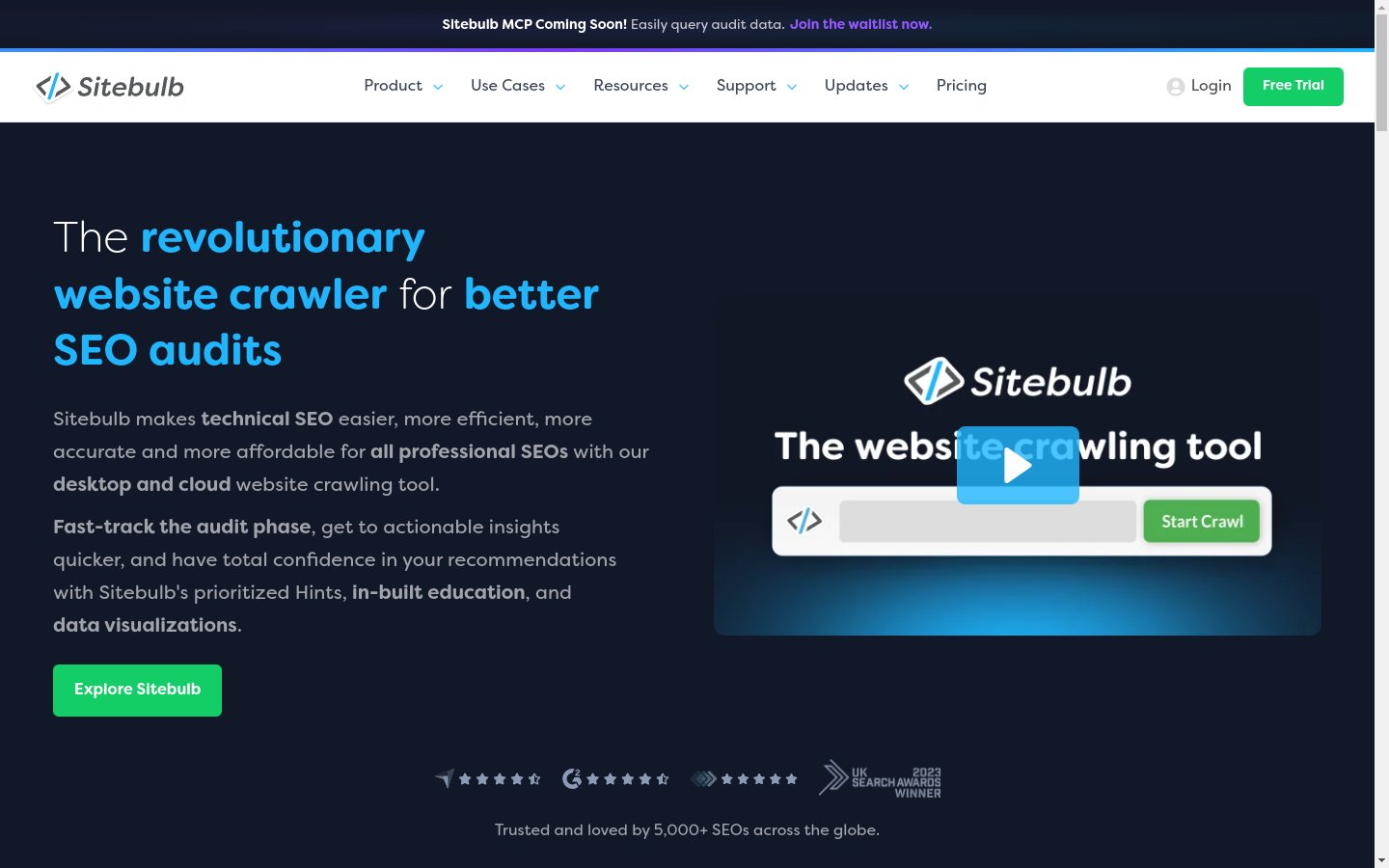 Source: Sitebulb official product page.
If you want a wider view of crawler tools beyond these, our guide to the best SEO tools covers some free alternatives worth knowing.
Speed and Scale
Screaming Frog is the speed champion. The crawler is highly optimised, runs locally on your machine, and can chew through tens of thousands of URLs faster than most cloud-based competitors.
For agencies that audit large e-commerce or news sites, raw crawl speed matters.
Sitebulb is slower because it does more work per URL. It gathers crawl data, then runs analysis, scoring, internal link mapping and visual rendering on top.
The trade-off is meaningful. A large Screaming Frog crawl might finish in a couple of hours, while the same crawl in Sitebulb takes longer but produces a much more digestible output.
For technical SEO work where you want to export raw data into Excel or BigQuery for custom analysis, Screaming Frog wins. For producing client-ready audit reports, Sitebulb wins.
Reporting and Recommendations
This is where the two tools diverge most sharply.
Screaming Frog gives you data. The interface is a tabbed view of every URL it crawled, with columns for status code, title length, meta description, indexability, response time, internal links count and dozens of other dimensions.
You filter, sort, and export. What Screaming Frog does not do is tell you what's important.
It surfaces the data. You bring the SEO judgement.
Sitebulb gives you recommendations. After each crawl, it generates a prioritised list of issues categorised by severity.
Each issue includes:
- A plain-English explanation of why it matters
- Examples of the specific URLs affected
- Recommended fix
- Educational links for deeper context
For training junior SEO staff, Sitebulb is invaluable. The recommendations actively teach SEO principles as you work through them.
Visualisations
Sitebulb produces visual reports that Screaming Frog does not.
The internal link diagram, the crawl depth chart, the canonical visualisation, the JavaScript impact view: all are graphical and export-ready for client decks. If you produce regular SEO audit deliverables for clients, Sitebulb saves hours of manual reporting work.
Screaming Frog has Site Visualisations, but they are more basic. You can map crawl depth and internal link structure, but the polish and detail in Sitebulb is significantly higher.
Custom Extraction and Advanced Use
Screaming Frog wins on flexibility.
Custom extraction (XPath, CSSPath, regex) lets you pull arbitrary data from any element of any page. Want to extract all product prices, customer review counts, hreflang tags, structured data, embedded video URLs?
Screaming Frog handles it.
You can connect Screaming Frog to GA4, Google Search Console, PageSpeed Insights and a custom JavaScript renderer for SPA sites. The integration depth is unmatched.
Sitebulb supports many of the same integrations and custom extractions, but the interface is less flexible. For one-off custom data pulls, Screaming Frog is the right tool.
Crash Resistance and Memory

Both crawlers run locally, which means both depend on your machine's RAM.
Screaming Frog uses RAM mode by default, which is fast but capped by your available memory. For larger crawls, you switch to Database Storage mode, which writes to disk.
This is slower but handles millions of URLs. Sitebulb uses Database Storage by default, which means it handles large crawls more reliably out of the box but is slower for small crawls.
For Singapore agencies running audits on enterprise sites, expect to allocate plenty of RAM (16GB is a sensible floor). The actual ceiling depends on the site's complexity, since JavaScript-heavy SPAs eat memory faster.
Pricing Compared
Screaming Frog: A free tier for small sites, then a flat annual licence per user. It is billed once a year with no monthly subscription, and it is the cheapest of the paid desktop options.
Sitebulb: Tiered monthly subscriptions (Lite, Pro and Agency), scaling by crawl volume. Annual billing offers a discount.
For solo SEO consultants doing a few audits a month, Screaming Frog's flat annual licence is hard to beat on price.
For agencies producing weekly client reports, Sitebulb's recommendation engine and visual outputs save enough time to justify the higher subscription.
When You Need Both
Many agencies run both, even though it doubles the spend.
The workflow looks like this: Screaming Frog for the deep technical crawl, custom extractions and raw data work. Sitebulb for the client-facing audit report with prioritised recommendations and visual diagrams.
For Singapore businesses considering hiring an SEO agency in Singapore, this is one of the things you are paying for. The tools are not free, the licences add up, and the expertise to interpret the output is the real value.
Free Alternatives
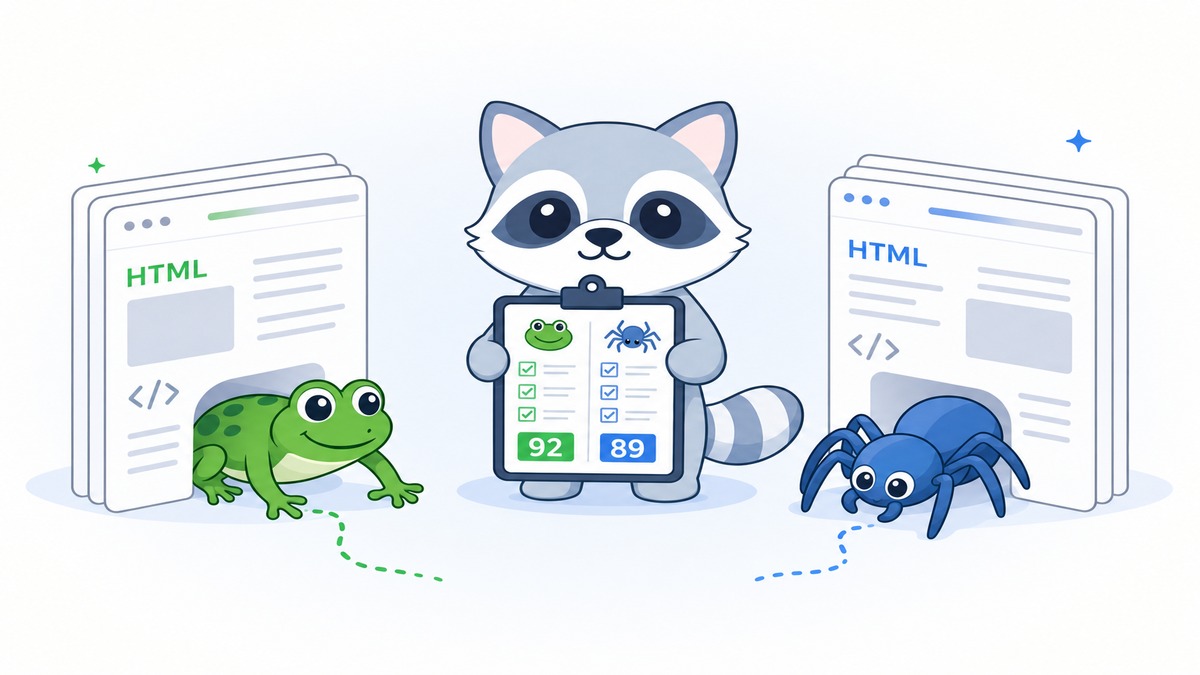
Before paying for either, know what's free.
For small sites, Screaming Frog's free tier is genuinely usable for full audits. Combine it with Google Search Console and Bing Webmaster Tools and you cover most diagnostic needs.
For medium sites, Ahrefs and Semrush both include site audit modules in their paid plans (covered in our Ahrefs vs Semrush vs Moz comparison). If you already pay for one of those, you may not need a dedicated crawler at all.
For genuinely small Singapore SME sites with a hundred-odd pages, the free Screaming Frog tier plus Google Search Console covers the basics. Read our DIY SEO guide for how to use these effectively.
Which to Pick
Pick Screaming Frog if: You want raw control, you do custom data extraction, you produce internal reports rather than client decks, or your budget favours a flat annual fee.
Pick Sitebulb if: You produce regular client audit reports, you train junior staff, you value visual reports for stakeholder communication, or you prefer guided recommendations over raw data.
Pick none of them if: Your site is small, you're not yet doing regular SEO audits, or your existing toolkit (GSC, Ahrefs/Semrush) already covers what you need.
Audits Are the Foundation, Not the Job
Either crawler will surface dozens or hundreds of issues. The harder part is prioritising fixes against the issues that actually move your rankings.
A crawl that flags 300 problems is only useful once a Singapore SEO expert has sorted the noise from the fixes that genuinely shift positions.
Audits are also evolving. As more search traffic shifts toward AI answer engines, the same crawl data feeds a second job: making sure your content is structured to be cited by generative search, not just ranked in the blue links.
That is where a GEO agency in Singapore comes in, turning audit findings into both traditional SEO and generative engine optimisation gains.
If you have run an audit and don't know what to do with the output, get in touch. We can walk through the report and translate the findings into a prioritised action plan.
An SEO consultant in Singapore is the difference between a crawl that lists 300 issues and a plan that fixes the handful actually costing you rankings.