

Google just dropped another algorithm update, and this one is aimed squarely at spammy websites. On 24 March 2026, Google officially launched its March 2026 spam update, the first spam-focused update of the year and the second major algorithm change announced in 2026. If your Singapore business relies on organic search traffic, now is the time to pay attention. Here is what you need to know, what to check, and what to do if your rankings have shifted.
Key Takeaways

- Google released the March 2026 spam update on 24 March 2026 at 3:20pm. Rollout is expected to take a few days.
- This is the first spam update of 2026. The previous spam update was in August 2025.
- Google's AI-powered spam detection system, SpamBrain, has been improved as part of this update.
- No specific spam type was singled out. The update targets all violations of Google's spam policies.
- Sites hit by link spam penalties may not recover their lost rankings, even after cleaning up spammy links.
- Check Google Search Console and your rank tracking tools for any sudden drops around 24 March 2026.
What Is the March 2026 Spam Update?
Google runs regular spam updates to clean up its search results and remove websites that manipulate rankings through deceptive or low-quality tactics. The March 2026 update is the latest in this ongoing effort, and it marks the first spam-specific update since August 2025.
Unlike a core update, which reassesses how Google evaluates content quality broadly, spam updates are targeted. They focus on sites that violate Google's spam policies, which cover practices like cloaking, hidden text, doorway pages, scraped content, and link manipulation.
Google did not name a specific spam type as the focus of this update. That means the net is wide. Any site engaging in tactics that violate Google's guidelines is at risk of being demoted or removed from search results entirely.
Timeline and Rollout Details
The update began rolling out on 24 March 2026 and is expected to complete within a few days. It applies globally, across all languages and locations. You can track its status on the Google Search Status Dashboard.
This is the second confirmed algorithm update of 2026. The first was the February 2026 Discover core update, which affected content surfaced in Google Discover feeds. The March 2026 spam update is separate and focuses on organic search results across the board.
If you notice ranking changes starting around 24 March, the spam update is the likely cause.
What SpamBrain Targets
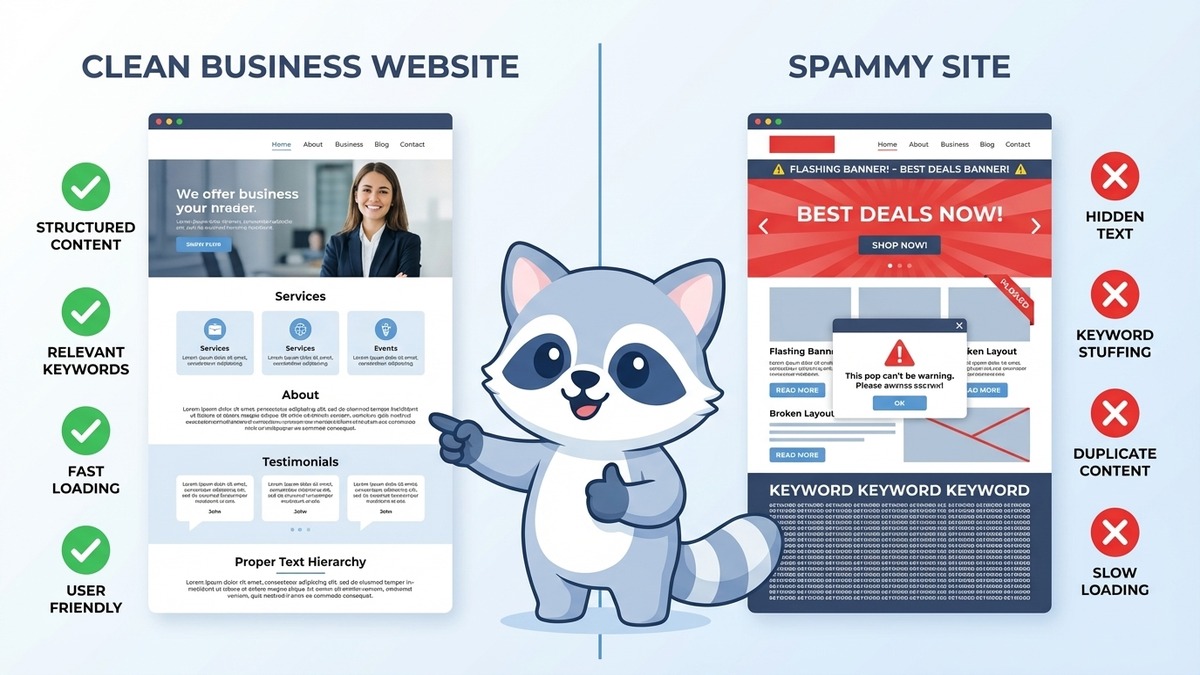
SpamBrain is Google's AI-based spam prevention system, and it has been improved as part of this update. While Google has not disclosed exactly what changed, SpamBrain is trained to detect a wide range of manipulative tactics.
Common spam violations that SpamBrain targets include:
- Cloaking: Showing different content to Google's crawlers than what real users see.
- Hidden text and links: Stuffing keywords or links into pages in a way that is invisible to users but readable by search engines.
- Doorway pages: Pages created purely to rank for specific searches, with no real value for visitors.
- Scraped content: Copying content from other websites and republishing it with little or no modification.
- Link spam: Building or buying low-quality backlinks to artificially inflate rankings.
- Auto-generated content: Mass-produced, low-quality content created to manipulate search rankings rather than help users.
One critical point about link spam: if this update removes the ranking benefit you were getting from spammy backlinks, that benefit is gone permanently. Google has stated that once the effects of link spam are neutralised, cleaning up those links will not restore your previous rankings. This is why building a clean backlink profile matters from day one. If you want to understand how links affect your rankings, our guide on backlinks as a ranking factor is a good place to start.
How to Check If Your Site Is Affected
Do not wait and hope for the best. Here is how to find out whether the March 2026 spam update has affected your site.
Google Search Console
Log in to Google Search Console and check the Performance report. Filter by date and look for any drop in clicks or impressions starting around 24 March 2026. A sudden, sharp decline is a red flag. Also check the Manual Actions report under Security and Manual Actions. If Google has manually penalised your site for spam, it will show up here.
Rank Tracking Tools
If you use a rank tracking tool such as Ahrefs, SEMrush, or Google Search Console's own position tracking, look for movement around the update date. Drops on specific pages, especially your highest-traffic landing pages, deserve closer investigation.
Organic Traffic in Analytics
Check your website analytics (Google Analytics or equivalent) for a drop in organic sessions around 24 March. Cross-reference this with your rank tracker to identify which pages lost visibility.
If you are not sure what you are looking for or how to interpret the data, a proper SEO audit is the clearest way to get an objective picture of your site's health.
What to Do If You See Ranking Drops
Stay calm. Not every ranking drop is a spam penalty. Sometimes updates cause temporary volatility before settling. But if the drop is significant and consistent, here is how to respond.
- Identify the affected pages. Use Search Console and your rank tracker to pinpoint which URLs lost visibility.
- Review those pages against Google's spam policies. Be honest. Does any content look thin, duplicated, or manipulative?
- Audit your backlink profile. Look for spammy or irrelevant links pointing to your site. Use the Disavow Tool in Search Console if you find toxic links you cannot remove manually. Remember: cleaning up bad links may not recover rankings lost from this update, but it prevents further damage.
- Improve the content. If pages have thin content or rely on auto-generated text, rewrite them with genuine value for your audience.
- Do not make panic changes. Widespread site changes during a rollout can make it harder to diagnose what caused the drop.
Google recommends reviewing its spam policies if you notice changes. The policies are publicly available and clearly explained.
Google's Spam Policies: What Counts as Spam
Google's spam policies cover a broad range of practices. In summary, spam includes:
- Cloaking and sneaky redirects
- Hacked content
- Hidden text or links
- Keyword stuffing
- Link spam (buying links, link schemes, excessive link exchanges)
- Machine-generated content created to manipulate rankings
- Malware and malicious behaviour
- Misleading functionality
- Scraped content
- Spammy auto-generated content
- Thin affiliate pages with little original value
- User-generated spam in comments or forums
If any of these sound familiar, your site may be at risk in the current or future spam updates. The safest path is to align your website with Google's guidelines permanently, not just when an update hits.
Common Spam Tactics in the Singapore Market
Singapore's competitive digital landscape has led some businesses, or their SEO providers, to cut corners. Here are patterns we see regularly in the local market.
Cheap link packages: Many Singapore businesses have been sold "backlink packages" through Fiverr or local agencies promising hundreds of links at low cost. These are almost always link farms or private blog networks, exactly what SpamBrain is designed to catch.
Copied content across service pages: Businesses with multiple locations or service variations sometimes duplicate content across pages with only the suburb or service name swapped out. This looks like doorway pages to Google.
Exact-match anchor text overuse: Backlink profiles where every link uses the same keyword anchor text (e.g. "SEO Singapore") are a textbook signal of link manipulation.
Outdated local SEO tactics: Keyword stuffing in Google Business Profile descriptions, or building citations on irrelevant directories, can attract spam signals too.
If your current SEO services provider has used any of these tactics, it is worth auditing your site now before the effects compound.
How to Stay Safe from Future Spam Updates
The best defence is a website that does not need defending. Here is what that looks like in practice.
Build content for people, not algorithms. Quality SEO copywriting answers real questions, provides genuine value, and reflects the expertise of your business. Google's SpamBrain is trained to distinguish between content that serves users and content that exists purely to game rankings.
Earn links, don't buy them. Focus on digital PR, original research, and creating content worth linking to. Avoid any service that promises links in bulk.
Keep your site technically clean. No cloaking, no hidden elements, no sneaky redirects. If you are not sure what these mean, our SEO glossary covers all the key terms.
Stay updated on algorithm changes. Google runs multiple updates every year. Keeping track of what changed and when helps you react quickly when rankings shift. Our running log of past Google algorithm updates is updated as new updates are confirmed.
Run regular audits. A quarterly SEO audit catches problems before they become penalties. Look at your backlink profile, content quality, and technical health consistently.
The March 2026 spam update is a reminder that shortcuts in SEO always carry risk. The businesses that hold their rankings through updates like this are the ones that invested in doing things properly from the start.
If you are not sure whether your site is at risk, or if you want a clear picture of where you stand after this update, our team at SEOExpert is here to help. Get in touch with us for a straight-talking assessment of your site's SEO health.
Source: Search Engine Land, March 2026