
Artificial intelligence has fundamentally changed how search engines work, but it has not killed SEO. In 2026, the core principles of SEO remain intact: create genuinely useful content, earn authoritative backlinks, maintain technically sound websites, and demonstrate expertise on your topic. What has changed is where that content gets surfaced. AI Overviews, Perplexity, ChatGPT, and similar tools are now traffic channels alongside traditional blue-link search results. Businesses that understand how to optimise for both will have a significant advantage over those still running 2020-era SEO strategies.
This article covers exactly what changed, what the research says about AI search behavior, and the specific tactics that work in the new landscape.
Key Takeaways
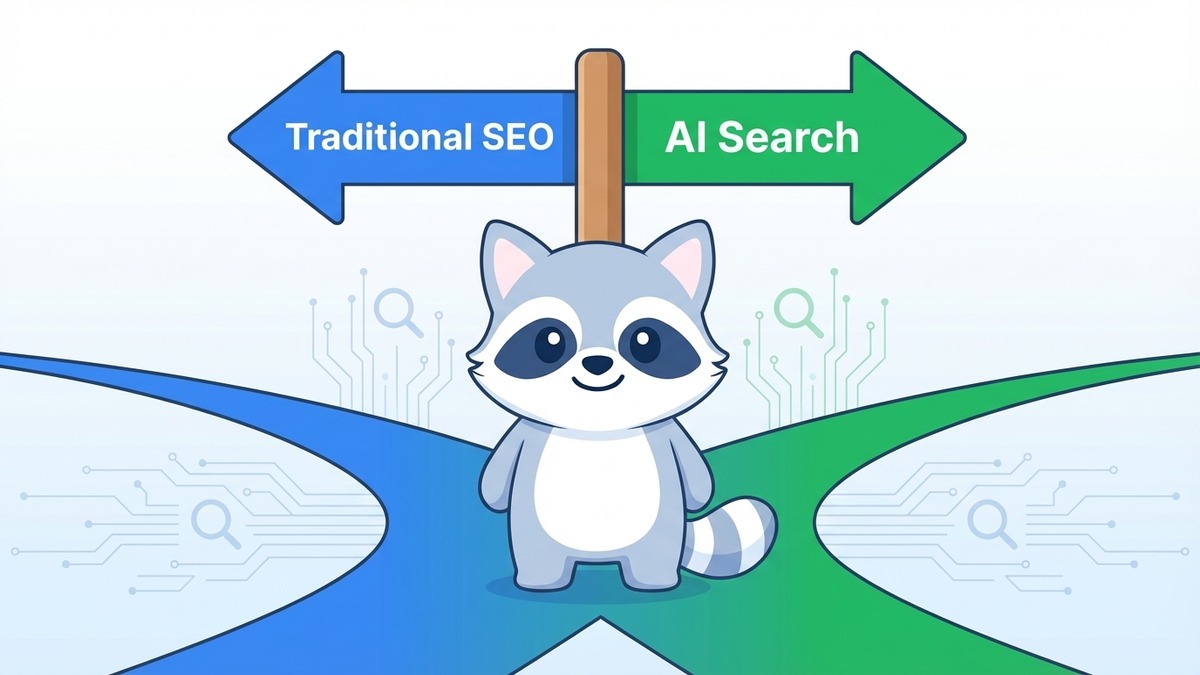
- AI has not replaced SEO. It has added a new layer called GEO (Generative Engine Optimisation) that works alongside traditional SEO.
- Google AI Overviews appear in an estimated 47% of all searches. Appearing in them requires specific content structure adjustments.
- The fundamentals still hold: E-E-A-T (Experience, Expertise, Authoritativeness, Trustworthiness), quality content, and authoritative backlinks are more important than ever.
- AI tools are excellent at automating parts of SEO (keyword research, content briefs, technical audits). Human strategy and brand voice remain irreplaceable.
- Zero-click searches are increasing, but AI citations drive brand visibility and direct searches that convert.
- Singapore's tech-forward market means AI search adoption is moving faster here than in many other markets. Early action creates early advantage.
What Changed: The AI Search Landscape in 2026
Google AI Overviews
Google launched AI Overviews (formerly Search Generative Experience) in 2024 and has expanded them significantly through 2025-2026. These are the generative AI answer boxes that appear above traditional organic results for many queries.
The impact on SEO has been debated intensely. Early studies showed click-through rates for organic results dropping when AI Overviews appear. But later research suggests something more nuanced: for informational queries where the AI Overview fully answers the question, clicks to organic results do decrease. For commercial and transactional queries ("best renovation contractor Singapore," "buy accounting software"), AI Overviews often include cited sources that receive significant referral traffic.
The practical implication: the game has two stages now. Stage one is appearing in the AI Overview. Stage two is appearing in the organic results below it for users who want to go deeper.
The Rise of AI-First Search Tools
Beyond Google, Perplexity, ChatGPT with web browsing, Microsoft Copilot, and Gemini are now part of how people research and discover businesses. In Singapore, adoption of these tools is among the highest in Southeast Asia, driven by the country's high tech literacy and smartphone penetration.
Surveys suggest that in 2026, a meaningful percentage of B2B purchase research starts on AI tools rather than Google. "Which CRM is best for Singapore SMEs?" "Who are the top digital marketing agencies in Singapore?" These queries happen on Perplexity and ChatGPT just as often as on Google for certain demographics.
Zero-Click Searches and What They Actually Mean
Zero-click searches are queries where the user gets their answer directly from Google (through featured snippets, knowledge panels, or AI Overviews) without clicking through to any website. This has grown significantly with AI.
The narrative that "zero-click searches are killing SEO traffic" is partly correct for purely informational queries. But it misses the larger picture: brand mentions in AI-generated answers create awareness and trust that leads to direct searches, typed-in URLs, and contact form submissions. Getting cited by an AI tool functions like a highly targeted editorial recommendation reaching exactly the right person at the right moment.
What AI Cannot Replace in SEO
Before diving into AI-specific optimisation tactics, it is worth being clear about what no AI tool actually replaces.
Original Experience and Perspective
Google's E-E-A-T framework (Experience, Expertise, Authoritativeness, Trustworthiness) specifically values first-hand experience. An article about "renovation costs in Singapore" written by someone who has managed hundreds of Singapore renovation projects contains information that cannot be scraped, synthesised, or generated. Real project photos, real price breakdowns, real contractor relationships. This content is what earns editorial trust from both Google and AI citation systems.
AI-generated content that presents no original experience or perspective is detectable and increasingly devalued. The agencies and businesses winning in 2026 are those producing experience-backed content that AI systems cannot synthesise from existing web data.
Strategic Thinking
Keyword research, content briefs, technical audits: AI tools can accelerate all of these. Deciding which keywords to target given your business's competitive position, budget, timeline, and growth goals requires human judgment with full context. AI tools are information synthesisers. Strategy requires decision-making with accountability.
Relationship-Based Link Building
Backlinks earned through genuine relationships, editorial mentions, and digital PR are not automated. A journalist at The Business Times deciding to quote your CEO requires human relationship-building, brand credibility, and timely outreach. No AI tool replicates this. As covered in Backlinks: The Secret Weapon, earned editorial links remain the highest-quality signals in Google's algorithm.
Brand Authority
When someone in Singapore searches for "digital marketing agency Singapore" and sees your brand mentioned in an AI Overview alongside a case study on Google, that is brand equity built through real results and real content. AI tools can write about your brand. They cannot create the underlying results and reputation that make the brand worth writing about.
What AI Is Actually Good For in SEO
On the flip side, AI tools have genuinely transformed the efficiency of several SEO activities.
Keyword Research at Scale
AI tools can process keyword lists, identify semantic clusters, categorise by intent, and map keywords to content types in minutes. Tasks that once took hours of manual spreadsheet work are now largely automated. Platforms like Ahrefs, SEMrush, and SE Ranking have all embedded AI features that make keyword research faster and more comprehensive.
Content Brief Generation
Given a target keyword, AI tools can generate detailed content briefs including: target word count, semantic keywords to include, heading structure suggestions based on SERP analysis, and competitor content gaps. These briefs do not replace the writing, but they significantly improve its quality by ensuring completeness.
Technical SEO Identification
Tools like Screaming Frog combined with AI analysis layers can identify technical issues and generate prioritised fix lists with explanations. What previously required an experienced technical SEO professional to diagnose is increasingly flagged automatically.
Meta Title and Description Optimisation
AI excels at generating and testing meta title and description variations. For sites with thousands of pages needing meta tag improvements, AI-assisted generation at scale is a major time saver. If you are writing or testing meta titles, use our SERP simulator to preview exactly how they will appear in search results.
Content Refresh Identification
AI tools can compare your existing content against current top-ranking pages and identify specific gaps, outdated information, and missing sections. This makes the content refresh process much more targeted than manually reading competitor articles.
GEO: The New Layer of Optimisation
GEO stands for Generative Engine Optimisation. It refers specifically to optimising content to be cited and referenced by AI search tools and AI-generated answer boxes.
GEO is not entirely separate from traditional SEO. The same authoritative, well-structured, comprehensive content that ranks in traditional search is also more likely to be cited by AI systems. But there are specific GEO-focused adjustments that traditional SEO does not cover.
Direct answer structure: AI systems heavily favour content that answers the main question directly and concisely at the start of a section. Opening every H2 with a 2-3 sentence direct answer that could stand alone as a response to the heading question significantly improves AI citation rates.
Specific, verifiable data: AI systems cite sources that contain specific statistics, named case studies, and verifiable facts. "Studies show that X% of users..." with a cited source is far more likely to be referenced than "many users believe..."
Authoritative brand signals: Being cited by credible sources, having a strong Wikipedia-style knowledge graph presence, and being mentioned across respected industry publications all increase the likelihood of AI tools treating your content as authoritative.
Structured content formats: Tables, numbered lists, and bulleted summaries are extracted into AI answers more frequently than flowing prose paragraphs. Use structured formats wherever content naturally allows it.
For businesses offering services in competitive Singapore markets, our GEO services help ensure your brand appears in AI-generated answers when Singapore buyers are researching your category.
How to Adapt Your SEO Strategy for 2026
Here are the specific strategy adjustments that reflect the AI-transformed search landscape.
1. Optimise for Both Traditional and AI Search
Do not choose between traditional SEO and GEO. The content adjustments for GEO (direct answers, structured formats, specific data) also improve traditional SEO performance. Apply both sets of practices to every piece of content.
2. Prioritise E-E-A-T Signals
More than ever, Google and AI systems reward content that demonstrates first-hand experience. Practical ways to demonstrate E-E-A-T:
- Author bios with relevant credentials and links to social profiles
- Original case studies with real data and named clients (where permitted)
- First-person perspective in relevant content ("We tested X with 5 Singapore clients...")
- Regular content updates with explicit "Last updated" dates
- Bylined content from subject matter experts on your team
3. Build Your Brand's AI Visibility
Audit which AI tools mention your brand and in what context. Search for your core service + location queries on Perplexity and ChatGPT. Are you appearing? If competitors are appearing and you are not, that is a gap to close through content and link-building work that builds the brand signals AI systems rely on.
4. Target Featured Snippets Strategically
Featured snippets and AI Overviews often draw from the same content. Pages already earning featured snippets are high-priority candidates for AI Overview citations. If you have pages ranking positions 1-5 that do not have featured snippets, review and restructure them.
5. Create Content AI Cannot Generate
Case studies, original research, expert interviews, proprietary data, and on-the-ground Singapore market analysis are content types that cannot be effectively replicated by AI synthesis. These are now your highest-value content assets. Invest in them.
6. Do Not Abandon Technical SEO
The AI search disruption narrative sometimes leads marketers to focus entirely on content while neglecting technical fundamentals. This is a mistake. If Google cannot efficiently crawl and index your pages, neither can the systems that power AI Overviews. Technical SEO is still foundational.
The Singapore Angle: AI Search Adoption and What It Means
Singapore's digital sophistication means AI search tools are adopted faster and more deeply than in most other markets. Several trends are particularly relevant:
B2B research is moving to AI tools: Singapore's large professional services, finance, and tech sectors have a high proportion of buyers who use AI tools for vendor research. If your firm targets Singapore B2B clients, AI citation is already commercially relevant.
Singapore government and institutions are investing heavily in AI adoption. Google's significant Singapore infrastructure investments reinforce that the market will remain Google-primary, but with AI layers increasingly prominent.
Language diversity: Singapore's multilingual market (English, Mandarin, Bahasa, Tamil) creates interesting dynamics for AI search. Most AI tools currently handle English queries best. For Chinese-language searches, Baidu and local Chinese AI tools are more relevant than Google or Perplexity.
AI adoption by Singapore agencies: Singapore's marketing industry has moved quickly to integrate AI tools for efficiency. This means the agencies competing for your business are using AI-assisted SEO tools. The question is not whether AI is being used, but how strategically it is applied.
For Singapore businesses evaluating whether to adjust their SEO strategy in light of AI changes, our SEO services in Singapore team can conduct an AI visibility audit alongside traditional SEO assessment. We identify where your brand appears (and where it should appear) in both Google and AI search environments.
The AI Search Traffic Reality: What the Data Shows
The narrative around AI search and traffic impact is often either catastrophist ("AI is killing SEO traffic") or dismissive ("nothing has really changed"). The actual data in 2026 is more nuanced.
For informational queries: AI Overviews do reduce clicks to organic results. A query like "what is SEO" that previously sent clicks to five blue links now often resolves entirely in the AI Overview without the user needing to click anywhere. For purely informational content without commercial intent, this is a real traffic reduction.
For commercial and transactional queries: The impact is different. "Best SEO agency Singapore" and "SEO pricing Singapore" generate AI Overviews that typically cite multiple sources, and users with commercial intent often click through to evaluate options. Traffic from these queries may actually increase for sites cited in AI Overviews.
For navigational queries: Minimal change. Users searching for a specific brand or product click through to that site regardless of what the AI Overview says.
Net effect for most Singapore businesses: A modest reduction in informational traffic offset by maintained or slightly increased commercial traffic, plus new visibility in AI Overview citations that creates brand awareness even without direct clicks. Businesses that were relying on pure informational traffic with no commercial conversion path are hurt most. Businesses with strong commercial-intent content and brand authority are largely unaffected or slightly benefited.
The businesses that are genuinely losing significant traffic are those that built their entire search strategy on AI-generated informational content with no original value. Google's March 2024 Core Update specifically targeted this content type.
Building Your AI Search Visibility: A Practical Framework
Getting cited by AI systems is not entirely in your control, but there are consistent patterns in what gets cited and what does not.
Step 1: Audit your current AI visibility
Search for 10-15 of your core business queries on both Google and Perplexity. Note which queries trigger AI Overviews or Perplexity answers. Note whether your site is cited. Note which competitors are cited.
This audit tells you where the AI citation gap is and what type of content is being cited.
Step 2: Structure your key pages for AI extraction
For every page you want cited:
- Open each major H2 section with a 2-3 sentence direct answer that could stand alone
- Include specific statistics with named sources (e.g., "According to a 2025 Google report, 62% of search queries with commercial intent include an AI Overview")
- Use a summary bullet list near the top of long articles
- Include at least one comparison table for any article covering multiple options
Step 3: Build authoritative brand signals
AI systems cite brands they recognise as authoritative in their domain. Build this recognition through:
- Consistent publishing in your topic area over time (not one viral article)
- Mentions and links from credible Singapore media and industry publications
- A clear "About" page with named experts and verifiable credentials
- Consistent NAP data across all online directories
- A Google Business Profile with strong reviews and complete information
Step 4: Earn editorial mentions
When the Business Times, Singapore Business Review, or respected industry publications mention your brand in relevant articles, AI systems extract those signals. Digital PR, thought leadership contributions, and expert commentary in media coverage all build the brand authority that AI citation systems rely on.
Step 5: Track and iterate
Monitor your AI visibility monthly. As you publish new content and build authority, re-run your AI visibility audit to see whether citations improve. This feedback loop tells you which content types and which topics are earning AI citations for your brand.
AI SEO Tools Worth Using in 2026
The AI tool landscape for SEO practitioners has matured significantly. Here are the categories that are genuinely useful:
AI content brief generators (Surfer, Frase, SEMrush): Given a target keyword, these tools analyse the top-ranking pages and generate a structured content brief including suggested headings, semantic keywords to include, ideal word count, and questions to answer. These briefs significantly improve content completeness.
AI-assisted keyword research (Ahrefs, SEMrush): AI clustering of keyword groups, intent classification, and topical gap identification are now embedded in major platforms. What used to take days of manual spreadsheet work now takes hours.
AI on-page optimisation (Surfer, Clearscope): These tools score your content in real time against top-ranking competitors and tell you specifically what to add, remove, or adjust. The scoring is not perfect, but it catches obvious gaps.
AI-powered technical auditing (Screaming Frog with AI summaries, SEMrush Site Audit): Crawl issue prioritisation with AI explanations of why each issue matters and how to fix it. Useful for non-technical clients and team members who need clear explanations alongside technical findings.
Large language models for research and drafting (Claude, ChatGPT): Excellent for researching topic areas quickly, generating initial content drafts, and editing existing copy. Always requires human review and enrichment with original experience and specific Singapore context.
What these tools cannot do: replace strategic thinking, generate original Singapore-specific case studies or data, build real relationships for link acquisition, or create the genuine expertise signals that both Google and AI citation systems reward.
Will SEO Be Replaced by AI?

The short answer is no. The longer answer is that SEO is evolving into a broader discipline that includes traditional organic search, AI Overview optimisation, and GEO for AI-first search tools.
The underlying goal has not changed: when someone searches for what you offer, your business should be visible, trustworthy, and compelling enough to earn their attention. The channels through which that visibility is achieved are expanding. SEO professionals who understand both traditional and AI search mechanics will be more valuable in 2026 than ever.
The businesses that will lose are those that ignore the AI shift and continue publishing low-quality content optimised only for old-school keyword stuffing. The businesses that will win are those that invest in genuine expertise, experience-backed content, and technical excellence that serves both human readers and AI systems.
For a historical perspective on how search has evolved through every major shift, our Google Algorithm Updates hub tracks every major change from Panda in 2011 through the AI era of 2024-2026.
The Bottom Line
AI has not made SEO easier or harder. It has made the fundamentals more important than ever while adding new channels and tactics to the playbook. The businesses winning in Singapore search in 2026 are not the ones with the most AI-generated content. They are the ones with the strongest real expertise, the most useful content, and the most authoritative signals.
Get those right, and both traditional search and AI search will send you traffic.
What Singapore Businesses Should Do Right Now
The practical starting point for Singapore businesses navigating the AI SEO shift:
Immediate actions (this week):
- Search for your top 10 target keywords on Google and note which show AI Overviews
- Search your brand name on Perplexity and ChatGPT to see how you appear
- Review your 5 most important pages: does each open with a direct, standalone answer to the main question it targets?
Short-term actions (this month):
- Update your key service pages to include direct-answer opening paragraphs
- Add at least one comparison table or structured list to your most important articles
- Ensure author bios on all articles include verifiable credentials
Medium-term actions (next 3-6 months):
- Commission at least one original research piece or data study relevant to your Singapore market
- Build a consistent digital PR cadence targeting Singapore media mentions
- Implement full structured data (schema markup) on service and article pages
Ongoing:
- Monitor AI search visibility quarterly alongside traditional GSC rank tracking
- Refresh existing content annually to maintain currency and completeness
- Continue building topical authority through consistent, expert-led content production
The AI search landscape will continue evolving. What will not change is Google's fundamental goal: surface the most genuinely useful, authoritative content for every query. Align with that goal and algorithm changes become tailwinds, not headwinds.
Ready to build an SEO and AI search strategy for your Singapore business? Contact our team for a free consultation on what is working right now.