

Your page is indexed. It has been live for months. It has a keyword in the title. But it is not ranking. Not even close.
Chances are, the problem is thin content.
Thin content is one of the most common and most overlooked reasons why pages fail to rank. It is not just about word count, although that is part of it. Thin content is any page that provides little or no value to users, whether that means it is too short, too generic, too duplicated, or too shallow to answer what the searcher actually came for.
And here is the part most site owners do not realise: thin content does not just stop individual pages from ranking. In enough volume, it can drag down your entire site's authority, suppressing even your strongest pages in the process.
Key Takeaways
- Thin content is any page that provides little genuine value to users or Google
- It includes short pages, duplicate content, auto-generated content, doorway pages, and spun text
- Google's Panda update specifically targeted thin content and its effects are now permanent in the core algorithm
- Thin content lowers site-wide quality signals, not just the individual page's rankings
- The fix is not always deletion, many thin pages can be expanded, consolidated, or redirected
What Counts as Thin Content?
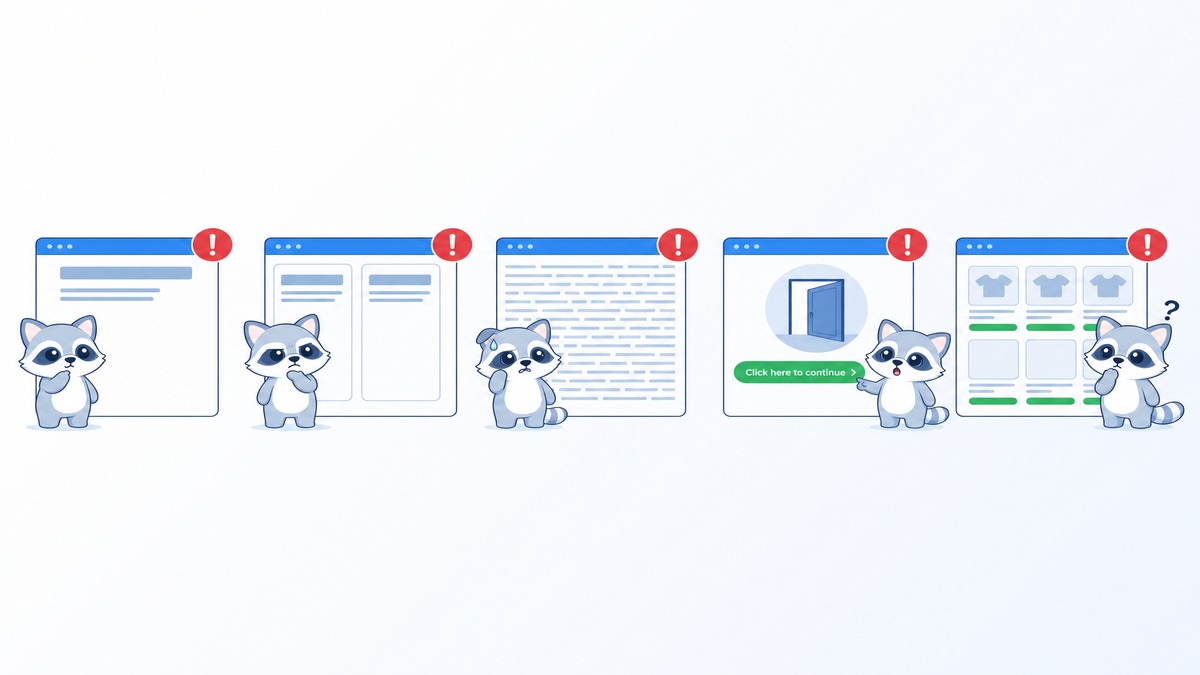
Thin content takes more forms than most people realise. It is not just "a page with 100 words." Here are the main types Google identifies and penalises:
Short, shallow pages: A 150-word page that broadly covers a complex topic without real depth or original insight. It might be technically accurate, but it does not tell the reader anything they could not find better elsewhere.
Duplicate content: Pages that repeat content from elsewhere on your site, or from other websites. This includes product descriptions copied directly from manufacturers, boilerplate text repeated across location pages, and articles that have been lightly rewritten from other sources.
Auto-generated content: Content created programmatically that reads as formulaic or nonsensical to human readers. Common on large e-commerce sites or sites that use content generation tools without editorial oversight.
Doorway pages: Pages created specifically to rank for a keyword and immediately redirect users to a different page, or pages that exist solely to rank for a variation of a keyword with no genuine content difference.
Affiliate or aggregator pages with no added value: A page that simply lists products from an affiliate programme with no original reviews, comparisons, or guidance is thin. Google wants to see added value, analysis, context, original perspective.
Near-duplicate location pages: A common trap for service businesses expanding to multiple cities. Pages that say "We provide [service] in [City]" with only the city name changed are thin by definition. Each location page needs genuine, unique content to be valuable.
Why Thin Content Hurts Beyond the Individual Page
The most important thing to understand about thin content is that it is not a page-level problem. It is a site-level problem.
Google's quality assessment looks at your site as a whole, not just individual pages in isolation. A site with 30% thin pages is signalling to Google that it is not a high-quality, trustworthy source of information. That signal affects everything, including your best pages.
This is the mechanism behind many mysterious ranking drops. A site owner publishes great content on one topic, then publishes dozens of thin pages elsewhere on the site to capture keyword variations or cover their categories. The thin content does not just fail to rank, it actively pulls down the authority and trust signals of the quality content.
This is why content pruning (covered in our content pruning guide) and thin content are so closely linked. Pruning is often the cure. Identifying and removing or improving thin content restores site-level quality signals.
How to Find Thin Content on Your Site
You need a systematic process. Here is how to approach it.
1. Crawl your site with a dedicated tool: Screaming Frog will give you a full list of all indexed pages with word counts, title tags, meta descriptions, and more. Filter for pages under 300 words and review them all.
2. Check Google Search Console for low-impression pages: Google Search Console shows you which pages are appearing in Google Search and how often. Pages with consistently low impressions and zero clicks over 6-12 months are candidates for investigation.
3. Use site:yoursite.com searches: Running a site: search in Google shows you how Google currently perceives your indexed content. If there are pages in the results that surprise you, pages you did not realise were indexed, or pages with generic descriptions, those warrant a closer look.
4. Review your duplicate content: Tools like Siteliner identify duplicate blocks of text within your site. Any page with more than 50% duplicate content against other pages on your site needs attention.
5. Pull your SEO audit data: If you have never run a comprehensive SEO audit, this is the time. Our guide on why regular SEO audits matter explains what a full audit covers and how to interpret the results.
Fixing Thin Content: The Options
Expand and improve: If a page has a legitimate place on your site but lacks depth, add value. Research what the top-ranking pages on the same topic include. What questions do they answer? What depth do they go into? Rewrite the page to be genuinely comprehensive.
Consolidate: Multiple thin pages on the same topic should be merged into one authoritative page. Delete the thin pages, redirect them to the consolidated version, and make sure the consolidated page is genuinely excellent. We covered this approach in detail in the content pruning article.
No-index low-value pages: For pages that need to exist for functional reasons, filtered search results, tag pages, pagination pages, but add no standalone value, use the noindex meta tag. This keeps them out of Google's index without deleting them.
Delete and redirect: For pages with no traffic, no backlinks, no value, and no redemption path, deletion is appropriate. Always set a 301 redirect to the most relevant page on your site so any residual link equity is preserved.
Thin Content and the Content Structure Connection
One of the fastest ways to turn thin content into quality content is to improve its structure. A 300-word page that has a strong introduction, clear subheadings, a Key Takeaways section, relevant images, and useful internal links already feels substantially more substantial than an unstructured 300-word dump.
Structure signals quality. It shows Google that you have thought about how to present information clearly. Our piece on structuring blog posts for SEO covers the exact framework to follow when building out thin pages into something worth ranking.
When you pair structure with genuine depth, original insights, specific examples, actionable advice, you have the combination that gets pages onto page one.
How Much Content Is Enough?
This question comes up constantly, and the honest answer is: it depends on the topic and the competition.
For a query where the top-ranking pages are 1,200-1,500 words, a 400-word page is thin by comparison. For a query where the user needs a quick, direct answer and the top results are 600 words, writing 2,500 words just to hit an arbitrary count is padding, not quality.
The benchmark is not word count. It is comprehensiveness. Does your page fully answer the searcher's question? Does it cover the topic with enough depth to be genuinely useful? Does it provide something the user cannot find equally well by clicking another result?
Our SEO consultant case study shows what that looks like in practice. The page reached Google's AI Overview within a week after we combined useful content, a named expert, clear structure, internal links, and a fast page. Word count alone did not get it there.
If you answer yes to those questions, the word count takes care of itself. If you answer no, you have thin content, regardless of how many words are on the page.
For a deeper look at how keywords interact with content depth and placement, our guide on where to put keywords on your page is a useful read alongside this one.
Thin Content Across Different Site Types
Service businesses: Location pages, service pages with only a few lines, and "About Us" pages with generic boilerplate are the most common thin content culprits. Every service page should be a fully fleshed-out resource about that service, including what it is, who it is for, how it works, and why you are the right choice.
E-commerce: Product pages with manufacturer-provided descriptions, category pages with no introductory content, and tag pages are the main thin content issues. Our e-commerce SEO service specifically addresses on-page quality at scale for online stores.
Blogs: Short posts published for quantity rather than quality, roundup posts with no original value, and old posts that no longer reflect accurate information. A content audit every 6 months keeps blog quality high.
Building a Quality-First Content Culture
The best defence against thin content is not reactive pruning. It is publishing less content and making each piece genuinely valuable from the start.
This is a mindset shift for many businesses that have been told "publish more, publish often." Publishing frequency matters far less than publishing quality. One excellent, comprehensive article is worth more to your SEO than ten thin posts.
Pair this with our SEO copywriting approach and you have a content strategy that compounds over time, each article adding real authority to your site rather than diluting it.
If your site has accumulated thin content over the years and you are not sure where to start, the team at SEOExpert Singapore can audit your site, identify exactly what needs fixing, and build a clear action plan. Get in touch with us and our GEO agency in Singapore will help you turn a thin content problem into a ranking opportunity. Working with an experienced SEO consultant means the thin pages get pruned, merged, or rewritten in the right order instead of all at once.