
Instagram SEO is the practice of optimising your profile, captions, and content so that Instagram's search algorithm shows your content to people who are actively looking for what you offer. Instagram's search function has evolved significantly. Users now search Instagram the way they search Google: typing phrases like "best ramen Singapore," "skincare routine oily skin," or "Singapore florist delivery" directly into the search bar. If your content is not optimised for these searches, you are invisible to a growing segment of your most valuable potential customers.
This guide covers how Instagram SEO actually works in 2026, what specific elements to optimise, and how Singapore businesses can use Instagram search to build genuine organic reach without depending on hashtags alone.
Key Takeaways
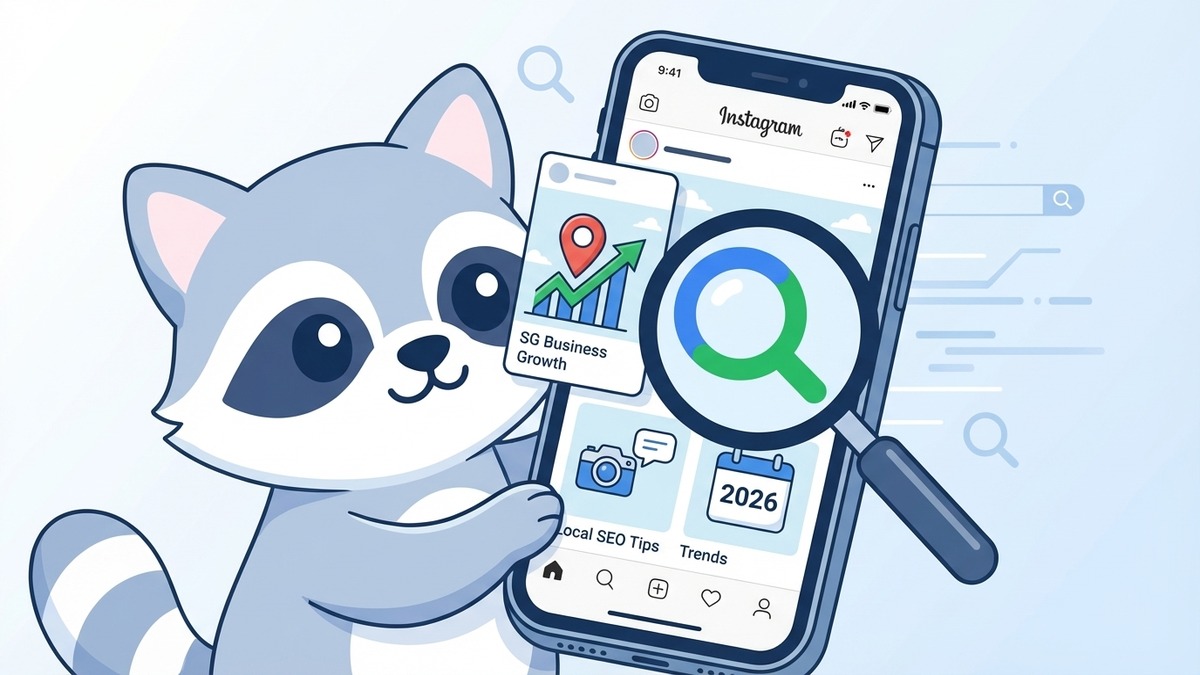
- Instagram now functions as a search engine, especially for younger users who discover businesses through search rather than ads.
- The key SEO signals on Instagram are: keywords in your username, name field, bio, captions, and alt text on images.
- Hashtags still matter but are less important than they were in 2020. Keywords in captions now drive more discoverability.
- Your name field (different from your username) is the single highest-impact SEO element on your Instagram profile.
- Singapore Instagram users heavily search for local food, beauty, fashion, fitness, and lifestyle content. These niches have strong organic discovery opportunities.
- Instagram Reels have the highest discoverability of any Instagram content format in 2026.
Why Instagram SEO Is Worth Your Attention Now
Instagram started as a photo-sharing app and was never built as a search engine. But user behaviour has changed it. Research from Meta shows that over 70% of users use Instagram to discover new products and services. More specifically, younger Singaporeans (Gen Z and millennials) often check Instagram before Google when looking for a local restaurant, salon, or boutique.
This shift has not gone unnoticed by Instagram itself. The platform has been steadily improving its search functionality, investing in keyword indexing that now includes captions, profile text, and alt tags. Instagram is not Google, and its search signals work differently. But the core principle is identical: if you use the words your audience is searching for, Instagram can match your content to their searches.
The brands and creators who understood this early are already reaping the benefits. The good news for Singapore businesses: most local competitors are still treating Instagram as a broadcast platform, not a search-discoverable one. That gap is your opportunity.
The Anatomy of Instagram SEO: What the Algorithm Actually Reads
Instagram's search algorithm uses several data points to rank content. Understanding each one lets you optimise strategically.
Your Profile Name Field
This is the single most important SEO element on your Instagram profile. The name field is different from your username. Your username is the @handle. Your name field is the text that appears in bold under your profile photo. Instagram's algorithm weighs keywords in the name field very heavily for search ranking.
Most Singapore businesses waste this field by just entering their business name. Example: "@thecakeshopsg" with a name field that says "The Cake Shop." This means they only rank when someone searches for their exact business name.
A better approach: use the name field as a keyword descriptor. "@thecakeshopsg" with a name field that says "The Cake Shop | Custom Cakes Singapore." Now the profile appears when people search "custom cakes Singapore." The parenthetical or pipe separator approach lets you combine your brand name with your primary search keyword.
Your Bio
Instagram indexes the text in your bio for search. This means every word in your bio is potentially a keyword that can help you appear in searches. Write your bio with intentional keywords, not just poetic brand language.
A bio that says "We create beautiful moments, one cake at a time" is emotionally appealing but SEO-blind.
A bio that says "Custom birthday cakes and wedding cakes in Singapore. Order online, island-wide delivery" is both human-readable and keyword-rich. Someone searching "birthday cake Singapore delivery" can now discover this profile.
Keep your bio to 150 characters (Instagram's limit). Front-load the most important keyword phrase.
Captions
Instagram's algorithm reads captions to understand what content is about. In 2026, keywords in captions have overtaken hashtags as the primary discoverability driver. This does not mean stuffing captions with keywords. It means writing naturally about your topic using the words your audience would use to search for it.
If you are a Singapore personal trainer posting a workout video, a caption that says "Glutes and hamstrings day. Hit this 4-exercise circuit 3 times for maximum burn. Perfect for HDB home gym setups or void deck workouts" is genuinely keyword-rich for searches like "Singapore home gym workout" or "HDB workout."
The length of your caption also matters. Longer captions (150-300 words) give Instagram more text to index, creating more potential keyword match points. This is a shift from the "short, punchy caption" advice that dominated Instagram strategy five years ago.
Alt Text on Images
Every image you post on Instagram has an alt text field. If you do not fill it in, Instagram auto-generates a generic description using image recognition ("image of a person standing next to a table"). This auto-generated text is minimal and often inaccurate.
By writing your own alt text, you give Instagram a clear, keyword-rich description of your image. This directly feeds into search indexing. To add alt text: when creating a post, tap "Advanced Settings" at the bottom, then "Write Alt Text."
For Singapore businesses, including location-specific language in alt text helps with local discovery: "Handmade candle arrangements for wedding tables at Gardens by the Bay Singapore."
Hashtags: Still Relevant, Now Supporting Cast
Hashtags have not disappeared, but their role has changed. In 2026, hashtags function primarily as content categorisation signals rather than primary discovery tools. The days of dropping 30 hashtags and watching followers pour in are over.
The current best practice:
- Use 5-10 targeted hashtags per post, not 20-30
- Mix niche hashtags (#singaporebakery, #sgcake) with slightly broader ones (#sgfood, #singaporebusiness)
- Avoid banned or overused hashtags (Instagram suppresses them)
- Use hashtags that genuinely describe your content, not just popular ones with no relevance
Local Singapore hashtags remain valuable because they connect you to users specifically browsing Singapore content. Instagram users who browse #SGfood or #SingaporeEats are demonstrating local intent, making them higher quality potential followers and customers than someone who stumbles across a generic global hashtag.
Reels: The Highest-Reach Format for Instagram SEO
Instagram Reels have the highest organic reach of any content format on the platform in 2026. This is partly by design: Instagram is competing with TikTok and pushes Reels to non-followers more aggressively than photos or carousels.
From an SEO perspective, Reels have an additional advantage: they appear in Instagram's "Reels" tab search results. When someone searches for "how to cook laksa Singapore," Reels optimised for that phrase can appear in search results. Photos and carousels do not appear in this tab.
To optimise Reels for search:
- Include your primary keyword in the Reel caption (first sentence)
- Use the Reels audio track feature (original audio or trending sounds both work)
- Add on-screen text that uses your keyword naturally, as Instagram indexes visible text overlays
- Pin a keyword-relevant comment immediately after posting
The on-screen text point is particularly important. Instagram uses image recognition to read text displayed in videos. A Reel with a title card that says "Cheapest Gym in Singapore: Our Review" is optimised for that phrase across multiple signals simultaneously.
Instagram Keyword Research: How to Find What People Search For
Unlike Google or YouTube, there is no Instagram keyword planner with volume data. Keyword research for Instagram requires a different approach. If you also publish video content on YouTube, our YouTube SEO guide covers the keyword tools and optimisation tactics specific to that platform, many of which complement what works on Instagram.
Method 1: Instagram Search Autocomplete
Type a topic related to your business into Instagram's search bar and note every autocomplete suggestion. These are real searches that real users complete frequently. Search "Singapore food," "Singapore skincare," "Singapore interior design" and see what comes up.
Method 2: Competitor Caption Analysis
Find the top-performing accounts in your niche in Singapore. Read their highest-reach posts. What language do they use? What topics do they cover? Which phrases appear repeatedly? This is a manual but effective keyword research method.
Tools like Flick offer hashtag and keyword research specifically for Instagram. They show search volume estimates, competition level, and engagement rates for hashtags. This is not a perfect proxy for Instagram keyword search data, but it is the closest available tool. See our full breakdown in SEO tools by platform for a detailed comparison.
Method 4: Cross-Reference with Google
People who search Instagram often use similar language to what they search on Google. Use Google Keyword Planner or Google Trends to find the most-searched terms in your niche, then adapt them for Instagram context. Someone who Googles "best Korean restaurant Singapore Orchard" might type "Korean food Singapore Orchard" into Instagram search.
Singapore-Specific Instagram SEO Tips

Instagram is exceptionally popular in Singapore. Sprout Social and various regional studies consistently rank Singapore as one of the highest Instagram usage markets in Southeast Asia. Key niches with strong search-driven discoverability in Singapore include:
Food and Beverage: Searches for "hawker food Singapore," "cafe Buona Vista," "best dim sum Singapore" are common. Food businesses should include neighbourhood names, dish names, and location qualifiers in every post caption.
Beauty and Skincare: Searches like "skincare routine Singapore humidity," "best facial Singapore," "acne treatment SG." The humid Singapore climate is a legitimate angle for skincare brands to use as a keyword differentiator.
Fitness: "HIIT class Singapore," "yoga Orchard," "personal trainer Singapore." Studio owners and trainers should include MRT station proximity in captions ("3 minutes from Dhoby Ghaut MRT") as Singapore users commonly search this way.
Home and Interior Design: "HDB renovation Singapore," "Japandi living room Singapore," "interior designer Tampines." Singapore's unique housing culture (HDB flats, condos, shophouses) creates highly specific and searchable content opportunities.
Fashion and Lifestyle: Singapore-specific angle includes weather-appropriate dressing, local events (National Day, CNY, Hari Raya styling), and local brand discovery.
Building a Content Rhythm That Feeds the Algorithm
Instagram's algorithm rewards accounts that post consistently and generate strong engagement relative to their follower count. From an SEO perspective, consistency matters because:
- Regular posting gives Instagram more content to index
- Consistent engagement tells the algorithm your account is active and valued by real users
- A publishing rhythm makes it easier to maintain quality keyword research and caption strategy
For Singapore businesses, a realistic Instagram publishing rhythm might look like:
- 3-4 feed posts per week (photos or carousels with keyword-rich captions)
- 1-2 Reels per week focused on search discovery
- Daily Stories for relationship-building (Stories do not contribute significantly to SEO but maintain existing follower engagement)
This is not about churning out mediocre content at high volume. It is about building a sustainable rhythm that gives the algorithm consistent signals while maintaining content quality.
Our social media marketing team works with Singapore businesses on exactly this kind of content rhythm, integrating SEO strategy into every post format.
Tracking Your Instagram SEO Progress
Instagram does not show you keyword rankings the way Google Search Console does. But you can track proxy metrics that indicate SEO performance:
- Reach from non-followers: Found in Insights for each post. A rising trend means more people are finding your content through search and Explore.
- Impressions from Hashtags: Instagram Insights shows how many impressions came from hashtags specifically. Track this to see if hashtag strategy is contributing.
- Profile visits from content: When non-followers view your content and then visit your profile, this is a strong discovery signal.
- Follower growth from non-ad sources: Organic follower growth (not purchased, not from ad promotions) indicates natural discoverability.
Set a monthly review date and look at these metrics in aggregate. You are looking for gradual trends, not overnight spikes.
To understand the broader picture of how SEO builds visibility over time, the article how SEO actually works applies even in the Instagram context, because the core mechanics of matching content to search intent are fundamentally similar.
Your Next Move
Instagram SEO is one of the most underexploited growth levers available to Singapore businesses right now. The platform is increasingly search-driven, and most local competitors are still optimising for the 2019 version of Instagram, not the 2026 version.
Start with your profile today: update your name field to include your primary keyword, rewrite your bio with clear keyword-rich language, and add alt text to your next five posts.
For a full Instagram and social SEO strategy tailored to your Singapore business, talk to the SEOExpert team. We combine platform-specific SEO knowledge with deep experience in the Singapore market to build strategies that actually generate leads and customers.