
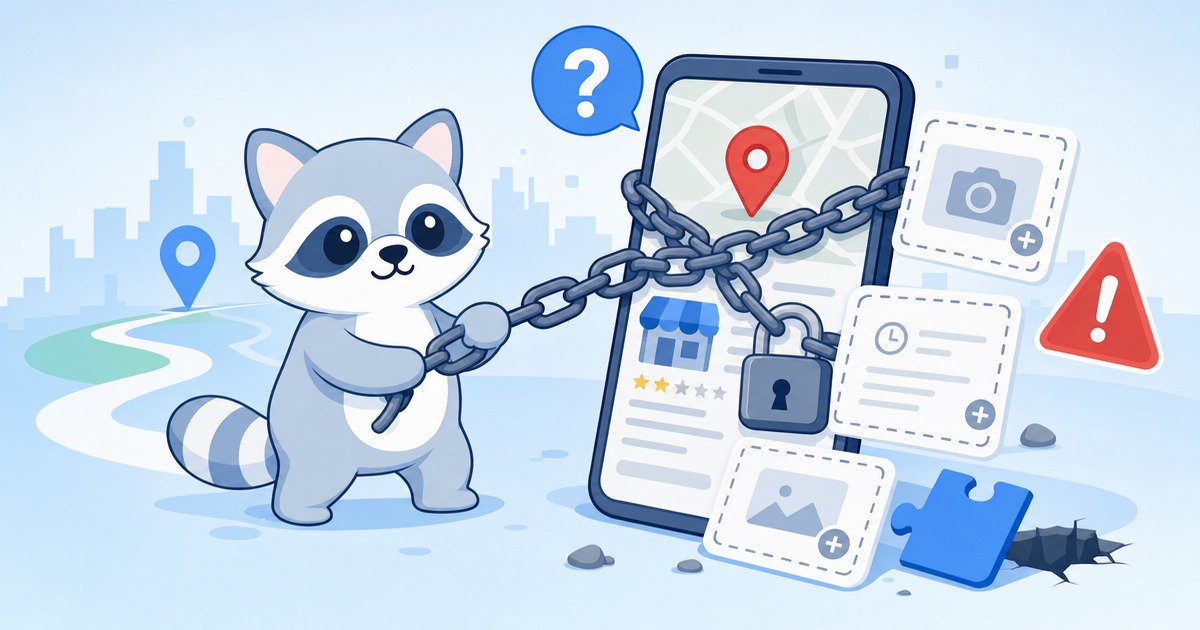
For years, most business owners treated their Google Business Profile like a form. Fill it in once, verify it, then forget it. That approach is now a problem. Google has launched Ask Maps, a conversational search experience powered by Gemini, and it changes what your profile has to do. Instead of matching a simple keyword, your profile now has to answer real questions with multiple conditions stacked on top of each other. If your data is thin or out of date, you do not just rank lower. You get left out of the answer entirely.
This shift lands right on the heels of Google's May 2026 core update, another reminder that the search landscape keeps moving and stale profiles get punished by inertia.
Key Takeaways
- Ask Maps is a Gemini-powered conversational feature in Google Maps that answers complex, multi-condition questions about places.
- It draws on over 300 million places and reviews from more than 500 million contributors, plus your Business Profile, website, and third-party sources.
- Multi-variable queries (open now, has parking, public, kid-friendly) demand complete, accurate, and current business data.
- Google has not revealed how Ask Maps ranks or selects businesses, so any ranking claim is an educated guess.
- A complete, active, and accurate profile is now the difference between being recommended and being invisible.
What Ask Maps Actually Does
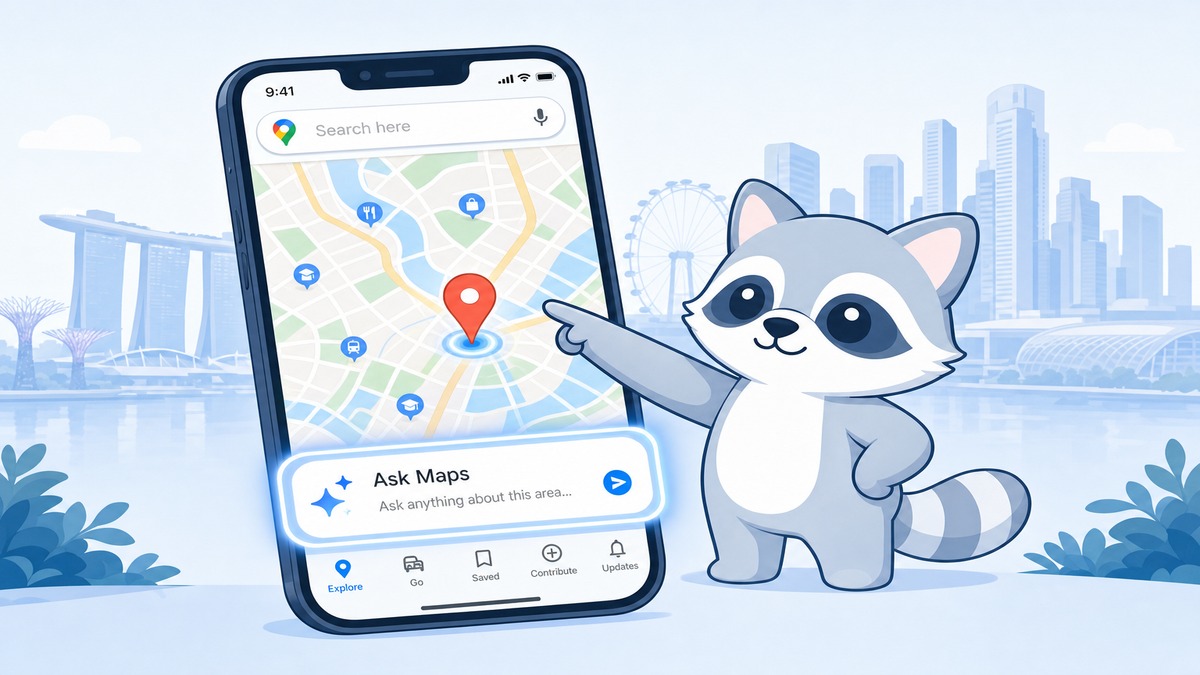
Google announced Ask Maps as a new way to explore places through conversation rather than keywords. Instead of typing "coffee near me," you can ask something like "My phone is dying, where can I charge it without waiting in a long line for coffee?" and get a conversational response with a personalised map.
The feature taps into Maps' freshest data: over 300 million places and a community of more than 500 million contributors. Responses are personalised based on signals like the places you have searched for or saved. So when someone asks for a cozy restaurant with a free table for four at 7pm tonight, Ask Maps factors in their saved preferences and real-time availability before recommending anywhere.
Ask Maps is rolling out now in the US and India on Android and iOS, with desktop coming soon. For local businesses, the rollout matters less than the mechanic underneath it. Your profile is no longer a listing. It is a dataset that Google reads to build an answer.
Why Multi-Variable Queries Change the Game
The questions Ask Maps answers are what make this shift meaningful. Google's own example, finding a "public tennis court with lights on that I can play at tonight," requires checking several things at once. The court has to exist in the data, be public, have lights, and be open at the time of the search.
Each of those conditions pulls from a different layer of local data. Entity and location details come straight from the listing. Amenities like lighting might come from structured place attributes, reviews, or photos. Whether somewhere is open tonight depends entirely on accurate operating hours.
This is the trap. A profile that ranks fine for a simple query like "mechanic in Tampines" might be too thin to surface for "mechanic open now in Tampines that takes walk-ins." The simple version only needs a category and a location. The detailed version needs hours, attributes, and signals that you are genuinely active. Strong local SEO has always rewarded completeness, but Ask Maps raises the stakes by making missing fields a reason to exclude you.
The Profile Completeness Gap
Both Google's local ranking guidance and independent survey data point to the same conclusion: complete and timely business information matters. Google's own guidance says businesses that keep their information up to date are more likely to be matched with relevant local searches.
Whitespark's long-running Local Search Ranking Factors survey, which has been gathering expert input since 2008, reinforces this. Many of the highest-scoring signals relate to whether business data is true and current. Being open at the time of search consistently rates as a key local pack signal, and reviews carried more weight in the 2026 survey than in 2023.
Interestingly, the survey also shows that filling out every single field is not the goal. Some inputs, like keyword stuffing in the business description, do not move the needle. The signals that matter are the ones that prove your business is genuine, active, and accurately represented. It is quality over quantity. This is exactly the kind of work that proper Google Business Profile optimisation focuses on: the fields that demonstrate authenticity, not vanity completeness.
What the Data Actually Pulls From
One thing local search experts agree on is that Ask Maps does not only read your profile. Greg Sterling of Near Media noted that Google's conversational features draw from "GBP, user reviews, the business website, and third-party sources." Darren Shaw of Whitespark took it further, describing this kind of discovery as pulling from "what the entire internet says about you."
That has a direct implication. Your Business Profile is the foundation, but your website, your reviews, and third-party mentions all feed the answer. If your hours are correct on Google but wrong on your site, or your reviews are stale, you are sending mixed signals to a system that rewards consistency. This is where local SEO and broader SEO services stop being separate jobs. They are one connected data layer that Ask Maps reads as a whole.
The same logic increasingly applies to AI search across the board. As LLMs become the front door to discovery, businesses that work with an AI SEO agency in Singapore to structure their data for machine reading will have a clear edge over those still treating their profile as a set-and-forget listing.
What We Still Do Not Know
It is worth being honest about the limits here. Google has not explained how Ask Maps chooses or ranks the businesses inside an answer. Until it does, any specific claim about the ranking process is an educated guess, not a fact. We also do not know the future of the public Q&A feature. Google ended its My Business Q&A API in November and has not detailed what replaces it, so there is currently no programmatic way to manage Q&A. Monetisation is another open question, with no mention of ads in Ask Maps at launch.
None of that changes what you should do now. The unknowns are about the algorithm. The fundamentals are not in question.
What to Do Right Now
You cannot game a system Google has not explained. What you can do is make your business the easy answer:
- Audit your hours and attributes. Confirm operating hours are correct, including holidays, and fill in attributes that match real-world queries (parking, accessibility, walk-ins, amenities).
- Keep reviews fresh and respond to them. Recent, genuine reviews carry more weight than ever, and responses signal an active business.
- Make your website and profile agree. Consistent hours, address, and service details across your site, profile, and directories reduce mixed signals.
- Watch who shows up. As Ask Maps rolls out, note the common traits of businesses appearing in answers: accurate hours, recent reviews, complete attributes, and a website that clearly explains what they offer.
In the past, a thin or stale profile might still have ranked, just weaker. With Maps now generating AI-assisted answers, that same gap can be the difference between being recommended and being skipped.
The Bottom Line
Ask Maps does not break local SEO. It rewards the businesses that were already doing it properly and exposes the ones who were not. If your Business Profile is complete, current, and consistent with your website and reviews, you are well positioned. If it has been sitting untouched since you verified it, now is the time to fix that, and our SEO experts can help you do exactly that.
If you want a profile and data layer built to surface in AI-driven local search, get in touch with our team. We will make sure your business is the answer, not the one left off the map.